Yala National Park: Leopards, Safaris and What to Actually Expect
By Sahan Kalpa Dayarathna · · 5 min read
- Province
- Southern Province, Hambantota District
- Size
- About 979 km² in total; Block 1 is roughly 141 km²
- Known for
- Leopards, elephants, sloth bears and birdlife
- Main gate
- Palatupana, about 20 minutes from Tissamaharama
- Safari times
- Early morning and late afternoon
- Best months
- February to July, when water sources dry up
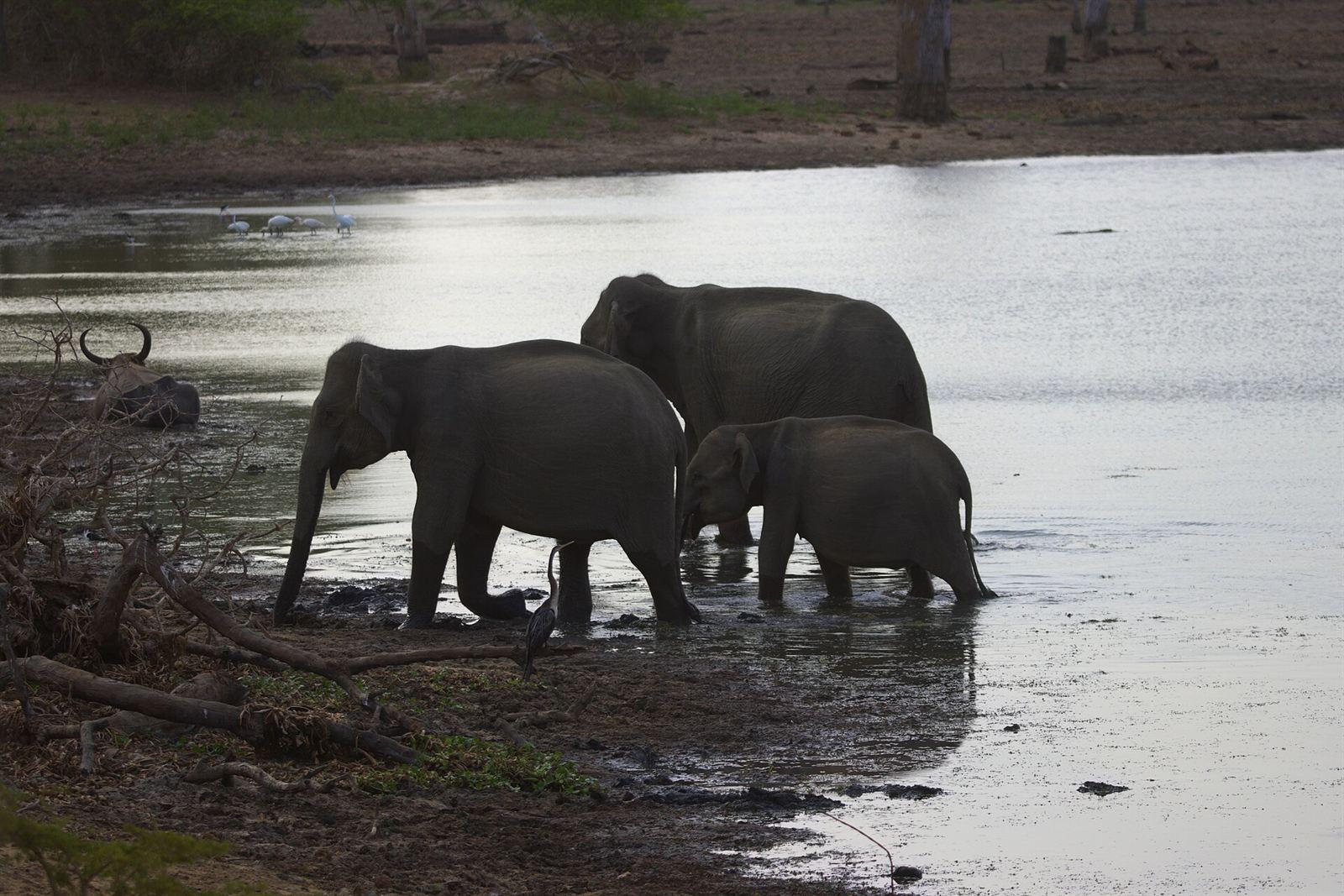
Yala is Sri Lanka's most famous national park and its most crowded. It sits on the south-east coast, a mosaic of scrub jungle, lagoons, rocky outcrops and long empty beaches, and it holds one of the highest densities of leopards anywhere in the world. That combination — real wildlife and easy access from the south coast — is why every jeep in the region seems to end up at the same gate before dawn.
The park is also a lesson in managed expectation. You can have a superb morning and see a leopard, a sloth bear and a herd of elephants. You can also spend four hours in a convoy of vehicles watching a bushes-shaped rumour while someone's engine idles.
What the park is actually like
Yala is not dense rainforest. Most of Block 1 is dry-zone scrub and open woodland, with rock outcrops that leopards use as vantage points. This makes the wildlife easier to see than in a jungle park, and it also makes the park look a little scrubby if you were expecting Tarzan.
Water is the organising principle. In the dry season, tanks and lagoons shrink and animals concentrate around them, which is why February to July is the classic window. Outside that period the park is greener and prettier, but the animals spread out and sightings become harder.
The coastline is part of the park, and the beaches inside Yala are wild and empty. You will not be allowed to get out and swim, for good reason: this is crocodile and elephant country.
Leopards, and honest expectations
Yala's leopards are habituated to vehicles, which means they are often seen resting on rocks or walking along tracks rather than vanishing into the undergrowth. That is also the problem: when a leopard is found, every jeep in range converges.
A good guide will read tracks and alarm calls rather than chase radio reports, and will back off when a sighting becomes a scrum. If your driver is racing other vehicles to a spot, you are contributing to the problem. Ask before you book how they handle a crowd, and be willing to spend a quiet hour watching birds instead.
Do not expect a guaranteed sighting. Many visitors see a leopard; plenty do not. The park is still worth visiting for elephants, crocodiles, monitor lizards, peacocks and the strange, beautiful landscape.
How a safari works
Safaris run in two windows: early morning, with vehicles entering around 5:30–6am, and late afternoon, entering around 2:30–3pm and leaving before the gate closes at dusk. The morning is generally better for predators and photography, though it is also the busiest.
You need a jeep, a driver-guide and park tickets. Most people book through their hotel or a local operator in Tissamaharama, where jeeps are plentiful. Prices vary with the vehicle, group size and whether tickets are included, so confirm exactly what the quote covers before you agree.
Take a dust scarf or buff, sunglasses, a hat, water and a camera with a long lens if you have one. The tracks are dusty, the morning is cold, and by 9am the sun is fierce. Wear muted colours, keep noise low and never ask the driver to leave the track.
- Morning safari: enter at dawn, best for leopards and birds
- Afternoon safari: warmer light, good for elephants and landscapes
- Full-day safari: expensive and bumpy, but avoids the midday exodus
- Confirm whether park fees, jeep and guide are included in the price
Block 1 and the other blocks
Block 1 is the classic Yala: the Palatupana gate, the highest visitor numbers and the most reliable leopard sightings. It is also the most congested. If you want the postcard experience with the best chance of a big cat, this is the block to choose.
Blocks 2 to 5 are quieter and require permits arranged in advance, sometimes as part of a guided tour. They offer a wilder experience with fewer vehicles and fewer certainties. Lunugamvehera, to the west, is another option for elephants and open country.
For most first-time visitors, one morning in Block 1 plus a night in Tissamaharama is the sensible introduction. Return on a second trip if you catch the bug.
Where to stay and what to pair with it
Tissamaharama is the main base: a small town with hotels, guesthouses and easy access to the Palatupana gate. Kataragama, to the north, is quieter and adds a major pilgrimage site to the itinerary. Inside and beside the park there are eco-lodges and tented camps, which cost more but put you closer to the gate.
Pair Yala with Kataragama temple, the ancient site of Situlpawwa, or the coast at Kirinda. On the way west, Udawalawe is a very different park — open grassland, elephants and a reservoir — and works well as a second safari if you have time.
Do not try to combine Yala with a long drive to Ella on the same day. The morning safari finishes late, the road is slow, and you will arrive exhausted.
Frequently asked questions
- How likely am I to see a leopard in Yala?
- Yala has a high density of leopards and many visitors do see one, especially in the dry season. But sightings are never guaranteed, and busy periods can turn a sighting into a traffic jam of jeeps.
- What is the best time to visit Yala?
- February to July, when water dries up and animals concentrate around the remaining lagoons. The park is greener and quieter from November to January, but sightings are less predictable.
- How much does a Yala safari cost?
- It depends on the jeep, group size and whether park fees are included. A shared half-day trip from Tissamaharama is the cheapest option; a private full-day safari with a good guide costs considerably more. Confirm inclusions before booking.
- Can you visit Yala independently?
- You need a vehicle and a driver-guide to enter, and park tickets are purchased at the gate. Independent travel without a jeep is not practical, so most visitors book through their accommodation or a local operator.
Written by
Sahan Kalpa DayarathnaSahan Kalpa Dayarathna is the editor of Discover Sri Lanka, based in Colombo. He writes the province guides, hotel picks and practical travel advice on this site, and updates them as transport, prices and opening times change.
Story filed 4 May 2026 about Yala National Park. Explore more in Southern Province.
More traveller stories
16 March 2026
Galle Fort: A Walking Guide to Sri Lanka's Walled City
Ramparts, lighthouse, boutique cafés and four centuries of colonial history inside a UNESCO old town that people still call home.
23 March 2026
Whale Watching in Mirissa: Blue Whales, Early Boats and Rough Seas
What a Mirissa whale-watching morning is really like, when the season runs and how to pick a boat worth boarding.