- Province
- Southern Province, Galle District
- Location
- About 5 km south of Galle Fort
- Best season
- December to April, when the bay is calmest
- Water
- Sheltered by headlands; usually the easiest swim on this coast
- Nearby
- Jungle Beach, Dalawella rope swing, Japanese Peace Pagoda
- Suggested stay
- Two to three nights
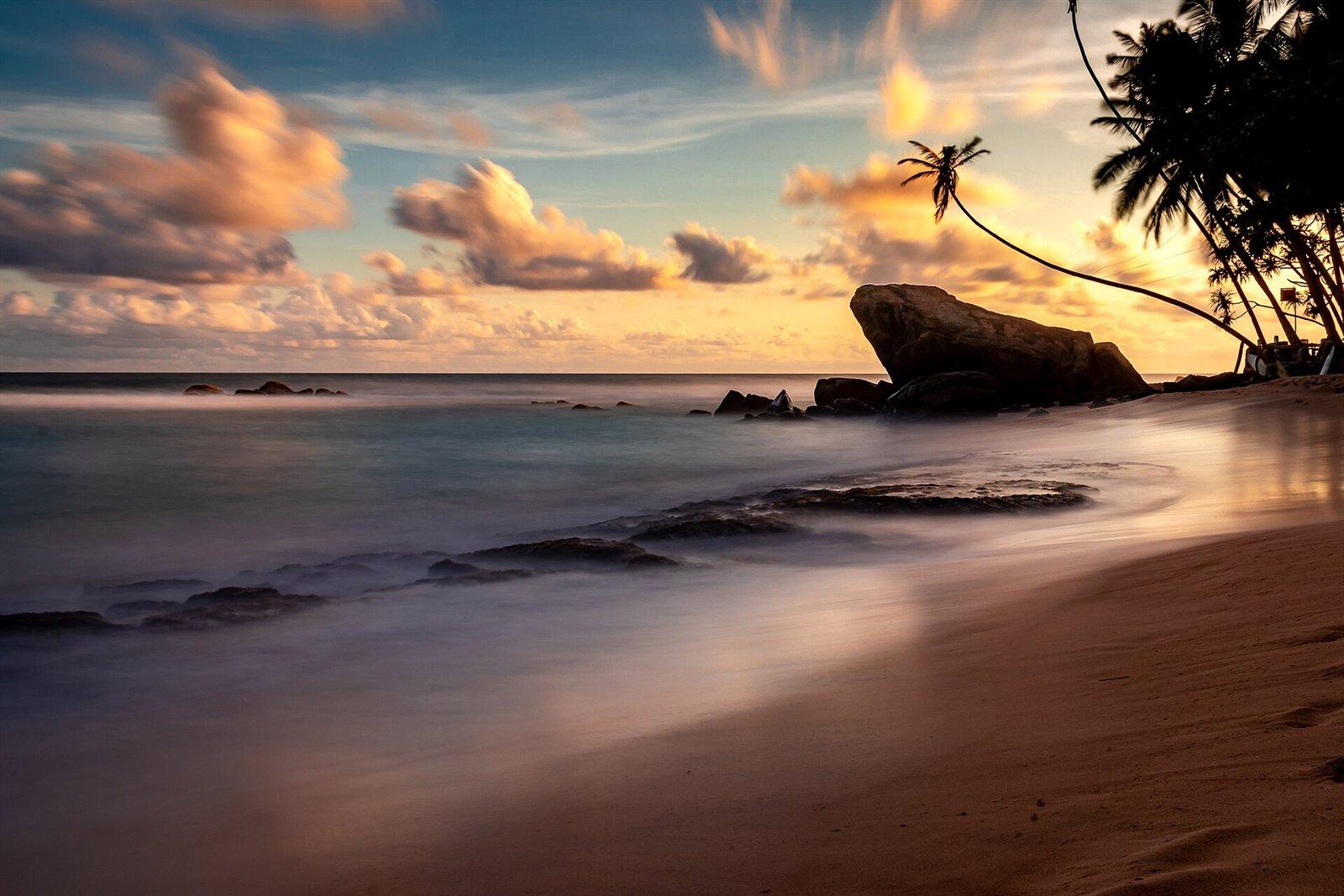
Unawatuna is a curved bay about five kilometres south of Galle, and its shape is the reason people love it. The headlands shelter the water from the worst of the swell, making it one of the easier south-coast beaches for swimming in season. The sand is golden rather than blinding white, the water turns a clear turquoise in the morning, and the beach is lined with cafés, guesthouses and dive shops.
It is not the untouched paradise the guidebooks of the 1990s described. The strip has developed quickly, the reef has been damaged, and in peak season the bay is busy. Used as a base rather than a destination in itself, though, it works very well: Galle Fort is fifteen minutes away, the quieter coves are a short tuk-tuk ride, and you can swim before breakfast.
Swimming and sea conditions
The bay faces roughly south-west, and the headlands at each end break up the swell. In the December-to-April season that makes for gentle water and easy swimming, even for children. Outside that window the sea gets bigger and the current can be strong; ask locally before going in, and never assume yesterday's conditions.
There is a reef just offshore, which creates patches of shallow coral and rock. Swim within the marked or obvious sandy areas and keep your feet off the bottom. Coral cuts heal slowly and can get infected.
Lifeguards are not consistently present. Rip currents form near the headlands when the swell is up, and the usual rule applies: if you are being pulled out, swim parallel to the beach rather than fighting straight back.
Snorkelling and diving
The reef supports snorkelling and a handful of dive sites, though the coral is not what it once was. Bleaching, anchoring and careless feet have taken a toll. Visibility varies with the season and the swell, and the best snorkelling is usually early morning, before the boats and the wind pick up.
Several dive schools operate from the beach and offer introductory dives, refresher courses and full certification. A discover-scuba session in the shallows is a reasonable way to spend an afternoon. Ask about group sizes and whether the instructor is certified, not just enthusiastic.
Boats can take you to quieter spots along the coast, and a glass-bottom trip is an easy option for non-swimmers. Choose operators who do not feed fish, do not stand on coral and do not chase turtles. A cheap trip that damages the reef is not a bargain.
- Snorkel early: the water is clearest before the wind arrives
- Wear a rash vest and reef-safe sunscreen
- Never stand on or touch coral, even in shallow water
- Choose operators who use moorings rather than anchors
Jungle Beach and the Japanese Peace Pagoda
Jungle Beach is a small cove around the headland to the east, reached by a short path or a tuk-tuk and then a walk. It is quieter than the main bay, with a couple of shack restaurants and better snorkelling. It gets crowded at lunchtime in season, so go early.
Above the bay, the Japanese Peace Pagoda is a white stupa built by Buddhist monks in the 1980s. The short climb takes about fifteen minutes and gives a view along the coast towards Galle. It is free to enter, quiet in the early morning, and a good place to watch the light change over the water.
Where to eat and what to do in the evening
Food is a strong point. Beachfront cafés serve everything from hoppers and fruit bowls to seafood platters and wood-fired pizza, and the quality is generally good because the competition is fierce. The local rice and curry is usually better value than the imported café food, and the fish is fresh.
For a quieter evening, head into Galle Fort, where the ramparts, bars and restaurants make a natural night out. The drive back after dark is short, and tuk-tuks are easy to find. Sunset on the fort walls is the standard ritual, and it deserves the reputation.
Getting there and getting around
Unawatuna is about two hours from Colombo by expressway, or three to four by the coastal railway to Galle plus a short tuk-tuk. The southern expressway has made it an easy weekend trip from the capital.
Everything in the bay is walkable, though the strip is long and the road busy. Tuk-tuks handle the coves, Galle and the surrounding beaches. Scooters are available to rent but the coastal road is fast and unforgiving; only ride if you are confident.
Stay two or three nights: one for the beach, one for Galle Fort, and one slow day for Jungle Beach and the pagoda. It is a good first stop south of Colombo and a comfortable base for the whole southern coast.
Frequently asked questions
- Is Unawatuna good for swimming?
- Yes, in season. The bay is sheltered by headlands, so the water is calmer than on much of the south coast. Outside December to April the swell and currents pick up, so check conditions locally.
- Is Unawatuna or Mirissa better?
- Unawatuna is better for calm swimming and easy access to Galle Fort. Mirissa is better for whale watching, surfing and a longer beach. Many travellers do both.
- How far is Unawatuna from Galle Fort?
- About five kilometres, or fifteen to twenty minutes by tuk-tuk. It is close enough to stay in Unawatuna and spend evenings inside the fort.
- Can you snorkel at Unawatuna?
- Yes, there is a reef just offshore, though the coral is patchy. Early morning is best, and nearby Jungle Beach usually has clearer water.
Written by
Sahan Kalpa DayarathnaSahan Kalpa Dayarathna is the editor of Discover Sri Lanka, based in Colombo. He writes the province guides, hotel picks and practical travel advice on this site, and updates them as transport, prices and opening times change.
Story filed 30 March 2026 about Unawatuna Beach. Explore more in Southern Province.
More traveller stories
16 March 2026
Galle Fort: A Walking Guide to Sri Lanka's Walled City
Ramparts, lighthouse, boutique cafés and four centuries of colonial history inside a UNESCO old town that people still call home.
4 May 2026
Yala National Park: Leopards, Safaris and What to Actually Expect
How a Yala safari works, when the leopards are easiest to see, which block to choose and why the crowds matter.