Temple of the Tooth: Inside Kandy's Sacred Relic Shrine
By Sahan Kalpa Dayarathna · · 5 min read
- Province
- Central Province, Kandy District
- Sinhala name
- Sri Dalada Maligawa
- Status
- UNESCO World Heritage Site, part of Sacred City of Kandy
- Puja times
- Roughly 5:30am, 9:30am and 6:30pm; evening is busiest
- Time needed
- One to two hours, including the palace complex
- Dress code
- Shoulders and knees covered, shoes and hats off
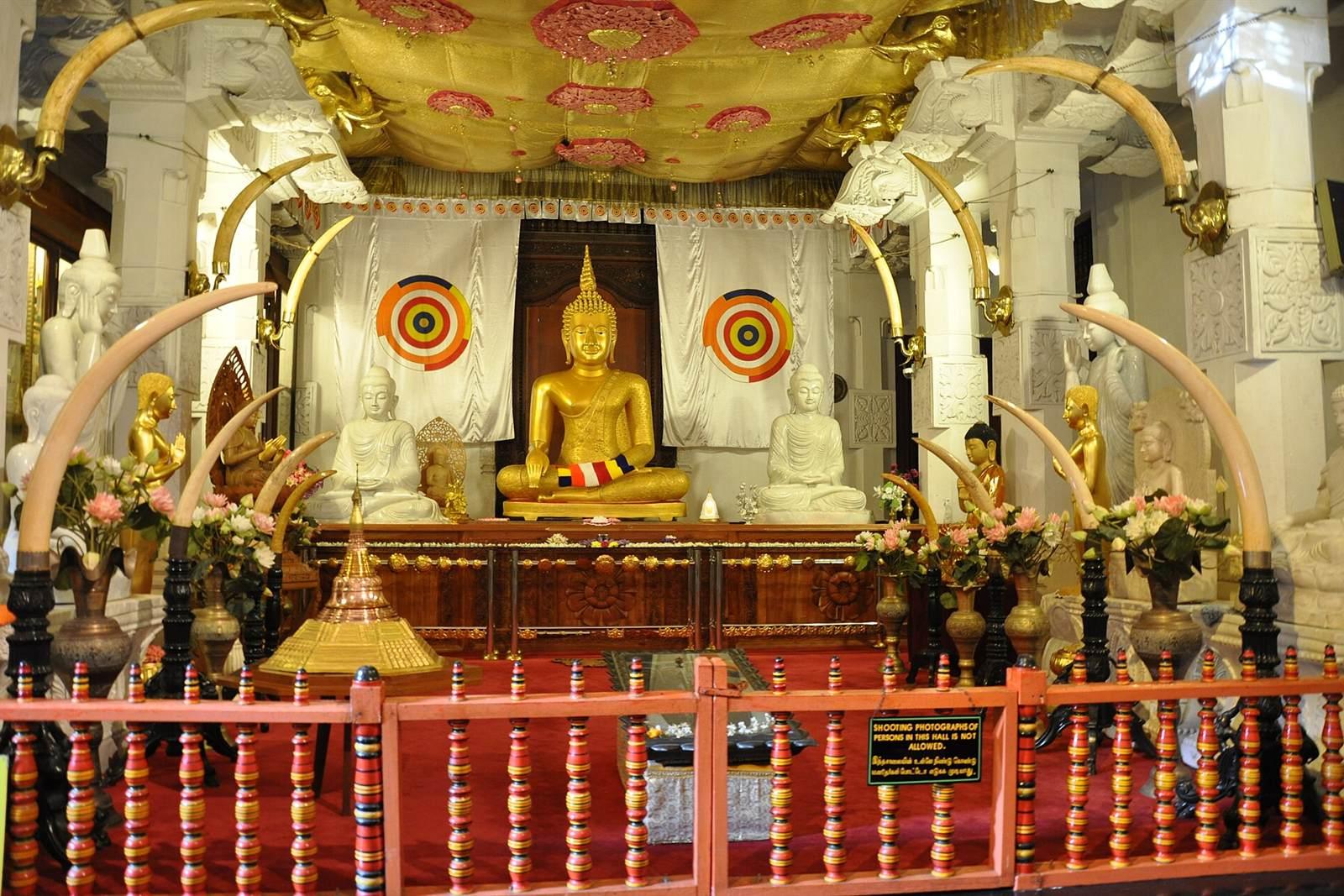
The Temple of the Tooth, or Sri Dalada Maligawa, sits beside Kandy Lake in the heart of the old royal capital. It houses what Buddhists believe is a tooth relic of the Buddha, brought to the island from India in the fourth century and carried through Sri Lankan history by kings who understood that whoever protected the relic held a powerful claim to legitimacy. The temple is a UNESCO World Heritage Site and the spiritual centre of the island.
The relic itself is almost never displayed. What visitors see is the elaborate shrine that contains it, housed inside a golden canopy and guarded by monks. The experience revolves around three daily puja ceremonies, when drummers beat traditional instruments, devotees arrive with lotus flowers and the inner chambers open briefly to the queue. Understanding that rhythm is the difference between a rushed photo stop and one of the most atmospheric half-hours in Sri Lanka.
What the three pujas are actually like
The dawn puja begins around 5:30am and is the quietest. Monks chant, the drums start, and a small crowd of devotees arrives with flowers and offerings. If you want to watch the ritual rather than the tour groups, this is the one to attend — although it means being at the gate before sunrise.
The midday puja is short and hot, and mostly attended by local worshippers. The evening puja, around 6:30pm, is the one most visitors see: the temple fills, the light fades, the lake outside turns silver and the drumming carries across the water. It is genuinely beautiful and also genuinely crowded. Arrive twenty minutes early and expect to stand.
During each puja the doors of the inner shrine open and the queue files past the golden casket. You will not see the tooth. What you will see is a stream of people bringing flowers, praying and moving on, which is the point of the place.
- Dawn puja: quietest, most devotional, best for atmosphere
- Midday puja: short, hot, mostly local worshippers
- Evening puja: the busiest and most photogenic
- Arrive 20 minutes early and leave your shoes at the deposit counter
The relic and why it matters
The tooth is believed to have been retrieved from the Buddha's funeral pyre and smuggled to Sri Lanka in the fourth century, hidden in the hair of a princess. It moved with the royal capital for centuries — Anuradhapura, Polonnaruwa, Dambadeniya, Kotte, Sitawaka — because the relic and the throne were understood as a single institution.
When the Portuguese destroyed the previous shrine in the sixteenth century, the relic was hidden and moved again. The current temple was built in the eighteenth century inside the royal palace grounds. It has been bombed twice in modern times, in 1983 and 1998, and repaired both times. That history is why the place feels less like a museum and more like a survivor.
Etiquette, and how not to be that visitor
Cover shoulders and knees, remove shoes, hats and sunglasses, and do not wear backless or sleeveless tops. Sarongs are available to borrow at the entrance for a small fee. Photography is allowed in the grounds but not in the inner shrine, where signs and staff will tell you to stop.
Walk clockwise around the shrine, keep phone calls short and step aside if you are blocking someone's view. Do not pose with your back to the shrine for a photograph, and do not touch the offerings. Security screening is normal — bags go through a scanner and there may be a separate queue for men and women.
If you are not Buddhist, you are welcome, but you are a guest in an active place of worship. Quiet is appreciated. So is not filming someone's prayer.
The Esala Perahera
Once a year, usually in July or August, the temple sends the relic casket out in procession for the Esala Perahera: ten nights of dancers, drummers, fire twirlers, whip crackers and caparisoned elephants, ending with a daytime water-cutting ceremony at the Mahaweli River.
It is a genuine spectacle and also a genuine crush. Kandy fills up, hotel prices double, and the best viewing spots along the route are reserved seating sold months in advance. If you plan to go, book accommodation early and expect to pay for a seat. Free spots exist but require arriving hours ahead and standing your ground.
Around the temple: what else to see in Kandy
The old royal palace occupies the same compound, and the National Museum next door covers the kingdom's history in a cool, quiet set of rooms. The Kandy Lake loop takes about forty minutes at a stroll and is best in the early morning mist or at dusk.
Above the city, the Bahirawakanda Buddha statue gives a view over the whole valley and the lake. Tuk-tuks will take you up and wait. The central market near the bus station is loud, colourful and worth a wander if you want to see the city going about its business rather than posing for tourists.
Kandy is also the gateway to the hill country. The train to Ella leaves from the station below the temple, and the journey — roughly seven hours through tea estates and viaducts — is one of the reasons people come to Sri Lanka. Book reserved seats well in advance; the unreserved carriages are an experience of a different kind.
Frequently asked questions
- Is the Temple of the Tooth worth visiting?
- Yes. It is the island's most important Buddhist site, and the evening puja in particular is unlike anything else in Sri Lanka. Even as a non-Buddhist, an hour here explains a great deal about the country.
- What time is the best puja at the Temple of the Tooth?
- The evening puja around 6:30pm is the most atmospheric, and the dawn puja around 5:30am is the quietest. The midday puja is short and mostly local.
- What should I wear to the Temple of the Tooth?
- Shoulders and knees must be covered, and shoes, hats and sunglasses removed. Avoid sleeveless and backless tops. Sarongs can be borrowed at the entrance if needed.
- How long do you need at the Temple of the Tooth?
- Allow one to two hours for the temple and the adjoining royal palace complex. Add another hour if you want to walk the lake and visit the National Museum.
Written by
Sahan Kalpa DayarathnaSahan Kalpa Dayarathna is the editor of Discover Sri Lanka, based in Colombo. He writes the province guides, hotel picks and practical travel advice on this site, and updates them as transport, prices and opening times change.
Story filed 23 February 2026 about Temple of the Tooth. Explore more in Central Province.
More traveller stories
16 February 2026
Sigiriya Rock Fortress: A Practical Guide to Climbing Lion Rock
Tickets, timing, the frescoes and the climb — what to expect at Sri Lanka's most famous rock fortress, plus the quieter view from Pidurangala.
2 March 2026
Nuwara Eliya Tea Country: A Guide to Sri Lanka's Hill Station
Cool air, colonial bungalows and endless tea estates — how to visit the heart of Ceylon tea without rushing it.