Sigiriya Rock Fortress: A Practical Guide to Climbing Lion Rock
By Sahan Kalpa Dayarathna · · 6 min read
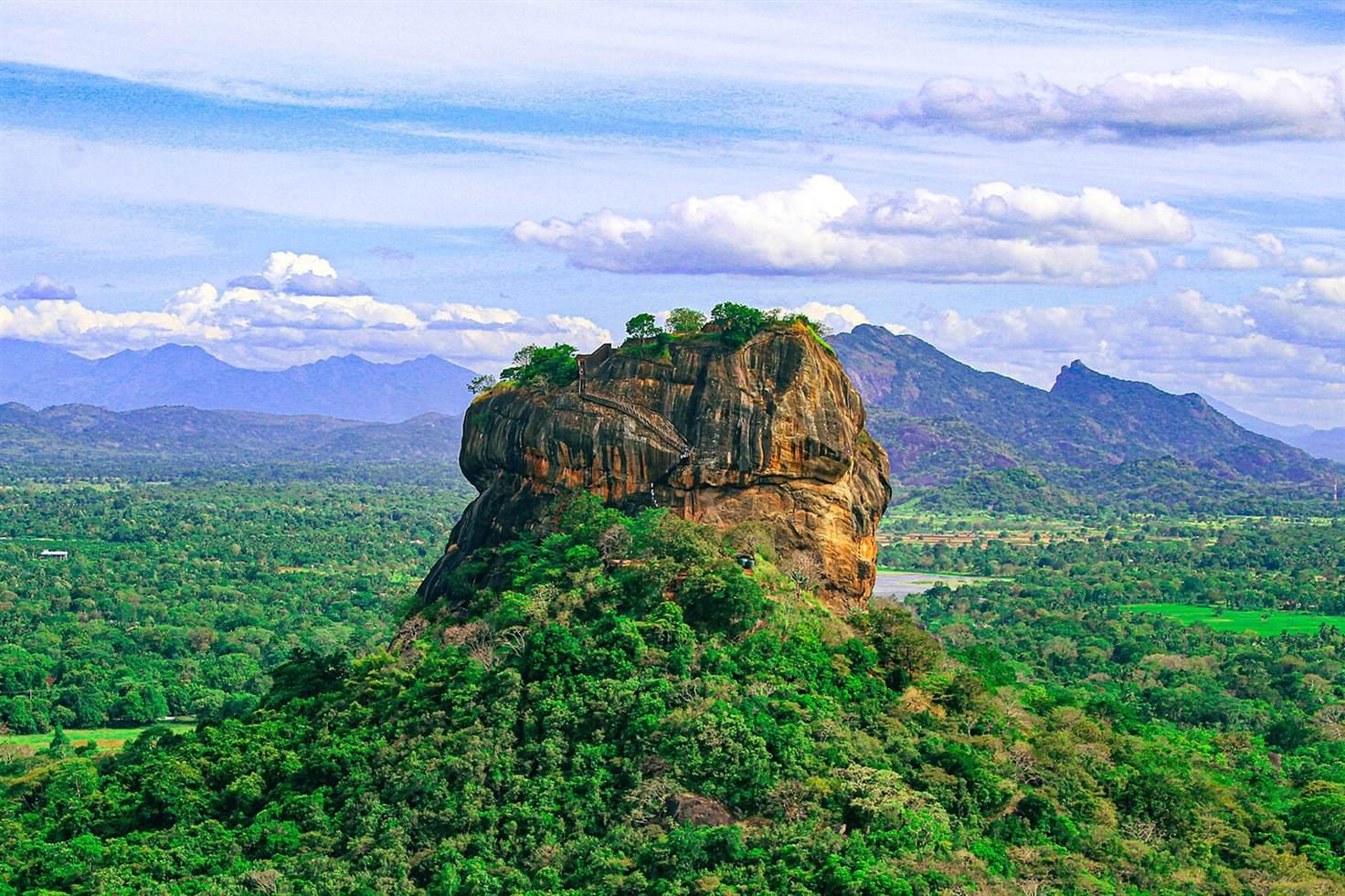
- Province
- Central Province, Matale District
- Nearest town
- Dambulla, about 30 minutes by road
- Built
- 5th century CE, under King Kashyapa
- Status
- UNESCO World Heritage Site since 1982
- The climb
- Roughly 1,200 steps; 2–3 hours round trip
- Best time
- At opening, before the heat and the crowds
Sigiriya is the image most people carry home from Sri Lanka: a sheer rock rising straight out of flat jungle, with the ruins of a royal palace on its summit. King Kashyapa built his capital here in the fifth century, wrapping the rock in water gardens, terraces and painted frescoes. His reign ended in battle, the site was abandoned, and the jungle took it back until British archaeologists began digging in the nineteenth century. Today it is a UNESCO World Heritage Site and the single most visited archaeological site on the island.
What surprises people is the scale. Sigiriya is not one rock with a staircase bolted to it — it is a planned city spread across several square kilometres, with moats, fountains, boulder gardens and a carefully engineered approach that reveals the rock gradually. The climb is the finale, not the whole performance. Give it a morning, not an hour.
What you are actually climbing
The rock itself is a hardened magma plug left behind by an extinct volcano, standing roughly 200 metres above the surrounding plain. The palace complex on top covers about 1.6 hectares and retains the outlines of audience halls, terraces, cisterns and gardens. Water was lifted to the summit by a system of pumps and channels — a piece of engineering that still reads clearly when you are standing among the ruins.
Below the rock, the western approach is laid out as three connected gardens: the water gardens with their symmetrical pools and fountains, the boulder gardens built around enormous granite outcrops, and the terraced gardens that climb the lower slopes. The fountains still run after heavy rain, fed by underground channels rather than pumps. Most visitors walk through them quickly on the way up; they are worth a slow look on the way down.
The route, step by step
From the ticket office, a gravel path crosses the moat and enters the water gardens. Keep left where the paths fork and you will pass the main pools before the ground begins to rise. The boulder gardens come next, with paths threading between rocks that once carried timber pavilions.
The climb proper starts at the base of the rock. A spiral staircase takes you up to the fresco pocket, a sheltered overhang where a handful of fifth-century paintings survive — women in profile, holding flowers, painted with pigments that have lasted fifteen centuries. Photography is allowed, but flash and tripods are not, and the stairway is narrow enough that you should keep moving.
Above the frescoes, the path runs along the Mirror Wall, a polished plaster surface that once reflected the king as he walked past. It is now covered in graffiti scratched by visitors over a thousand years, some of it poetry, some of it remarkably petty. The final staircase climbs between two enormous brick lion paws — all that remains of the lion statue that gave the rock its name — and emerges onto the summit plateau.
At the top, the foundations of the palace spread out around you, with the ocean of jungle beyond. The descent follows the same route, so the views you missed on the way up are waiting on the way down. Allow two to three hours in total, more if you stop often.
- Water gardens: symmetrical pools, fountains, and the oldest surviving landscaped gardens in Asia
- Frescoes: a small, protected pocket of fifth-century painting reached by a spiral stair
- Mirror Wall: polished plaster covered in centuries of visitor graffiti
- Lion paws: the last remnants of the colossal lion gateway
- Summit: palace foundations and a 360-degree view over the Cultural Triangle
Tickets, timing and what to bring
Foreign visitors pay a separate entrance fee, in the region of US$30–35 in recent years, while South Asian visitors and locals pay less. The rate changes from time to time and is not always clearly posted, so check the current price at the ticket office or on the official site before you commit. Cards are usually accepted, but carry cash as a backup, especially early in the morning.
Gates typically open around 7am and close in the late afternoon, with last entry an hour or so before closing. Arriving at opening is not just about crowds: by 10am the rock radiates heat, the staircases become single-file, and the light turns flat and hard. The first hour is cooler, quieter and much better for photographs.
Bring more water than you think you need, a hat, and shoes with grip — the rock can be slick after rain. There is little shade on the upper sections. The monkeys along the path are bold and quick; keep food in your bag, not in your hand. You will also see signs about wasps near the frescoes: the site has nesting hornets, and the advice is to stay quiet and keep moving through those sections rather than swatting at them.
Pidurangala: the view of the rock, not from it
About twenty minutes north of Sigiriya, Pidurangala is a lower rock with a rougher climb and a much better view — of Sigiriya itself. The path begins behind a working temple, passes a large reclining Buddha in a cave, and then turns into a scramble over boulders near the top. The final section requires hands as well as feet, so it is not suitable for everyone, and it is genuinely difficult in the dark.
Sunrise is the reason most people go: the light comes up behind Sigiriya and the rock turns from grey to gold while the jungle below stays in shadow. Allow thirty to forty-five minutes for the climb and bring a torch if you are starting before dawn. Cover your shoulders and knees for the temple at the base, and pay the small entrance fee at the gate. The summit is exposed and rocky, with nowhere comfortable to sit for long.
Where to base yourself and what to pair with it
Dambulla is the most practical base: it has the cave temple, a good spread of guesthouses and restaurants, and Sigiriya is a thirty-minute drive away. Habarana, further north, is quieter and better placed for Minneriya and Kaudulla national parks, where the elephant gathering draws crowds between roughly July and October.
If you have two mornings, use one for Sigiriya and the other for Pidurangala, then spend an afternoon at the Dambulla cave temple and a full day at Polonnaruwa, the medieval capital with its compact, bikeable ruins. That combination gives you the best of the Cultural Triangle without spending every day in a vehicle.
Book accommodation ahead in December to April and around Sri Lankan school holidays, when the Dambulla–Sigiriya road fills with domestic tour buses. Outside those peaks, you can usually decide the night before and still find a good room.
Frequently asked questions
- How long does it take to climb Sigiriya?
- Most people need two to three hours for the full visit, including the gardens, the frescoes, the summit and the descent. Fit walkers can do it in ninety minutes, but that leaves little time to look at anything.
- Is climbing Sigiriya difficult?
- It is moderate rather than technical: roughly 1,200 steps, some of them steep and narrow, in tropical heat. If you can manage several flights of stairs slowly, you can manage Sigiriya. Take your time, use the handrails and carry water.
- Is it better to climb Sigiriya or Pidurangala?
- They do different things. Sigiriya is the archaeology, the frescoes and the palace ruins. Pidurangala is the photograph of Sigiriya from across the valley. If you have time, do both on separate mornings — Sigiriya at opening, Pidurangala at sunrise.
- Do I need a guide at Sigiriya?
- Not strictly. Signage is reasonable and the route is obvious. A licensed guide is worth it if you want the history and the water-engineering detail explained, but agree the price before you start and confirm that the guide is authorised to enter with you.
Written by
Sahan Kalpa DayarathnaSahan Kalpa Dayarathna is the editor of Discover Sri Lanka, based in Colombo. He writes the province guides, hotel picks and practical travel advice on this site, and updates them as transport, prices and opening times change.
Story filed 16 February 2026 about Sigiriya Rock Fortress. Explore more in Central Province.
More traveller stories
23 February 2026
Temple of the Tooth: Inside Kandy's Sacred Relic Shrine
Sri Lanka's most important Buddhist temple, the three daily pujas and the rituals around a single tooth.
2 March 2026
Nuwara Eliya Tea Country: A Guide to Sri Lanka's Hill Station
Cool air, colonial bungalows and endless tea estates — how to visit the heart of Ceylon tea without rushing it.