- Province
- North Central Province, Anuradhapura District
- Location
- About 12 km east of Anuradhapura
- Significance
- Traditionally where Buddhism arrived in Sri Lanka, 3rd century BC
- Climb
- About 1,840 steps to the summit shrines
- Best time
- Late afternoon for the view; early morning for quiet
- Time needed
- One to two hours
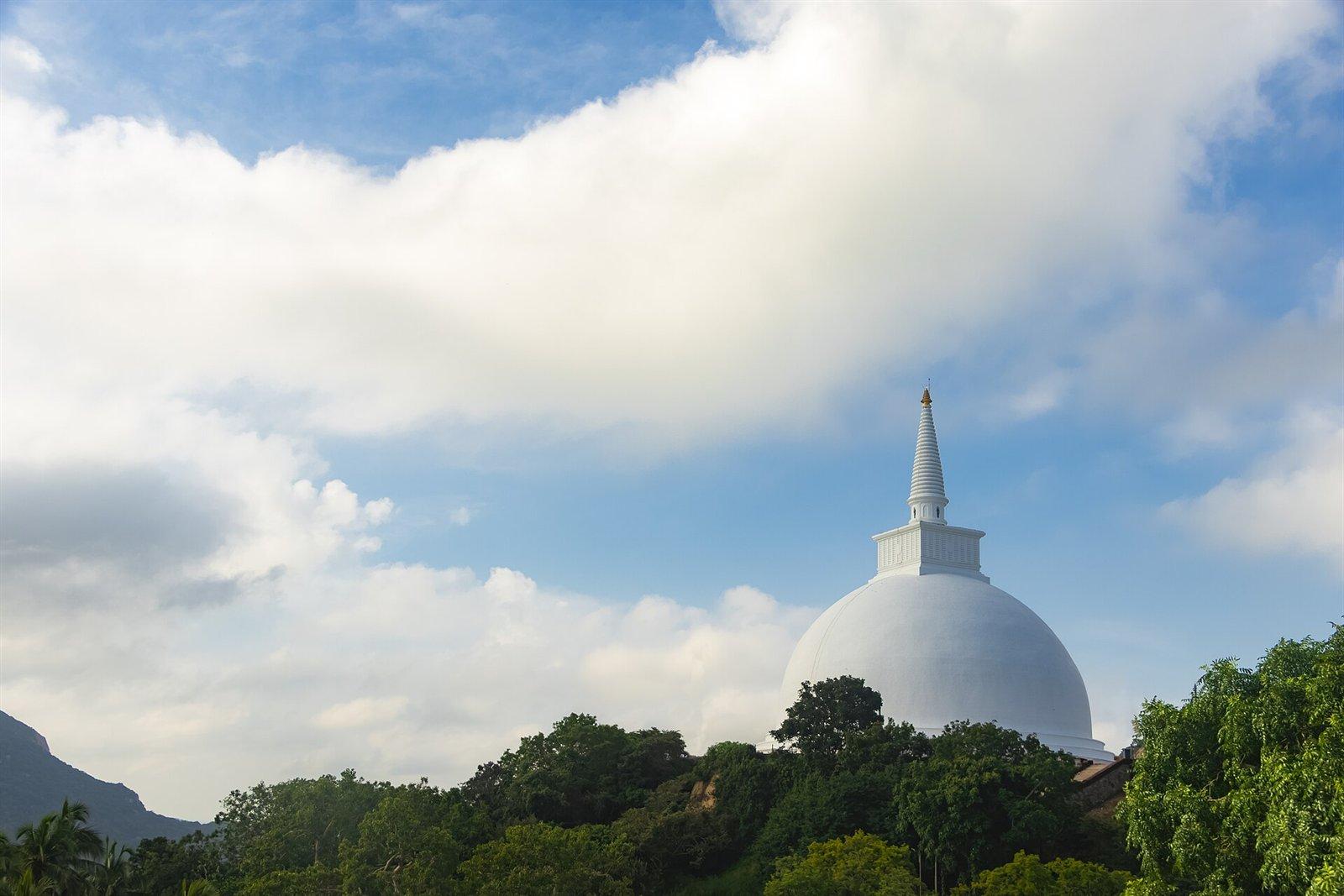
Mihintale is a small hill about twelve kilometres from Anuradhapura, and for Sri Lankan Buddhists it is one of the most important places on the island. According to tradition, it was here in the third century BC that the monk Mahinda met King Devanampiya Tissa and introduced Buddhism to Sri Lanka.
The site is marked by stupas, cave shelters, a rock inscription and a long climb of steps. It is also, quietly, one of the best places in the cultural triangle to watch the sun go down.
The story of the meeting
The chronicles describe King Devanampiya Tissa hunting on the hill when he encountered Mahinda, the son of the Indian emperor Ashoka, who had come to the island to teach. The king converted, and Buddhism became the state religion.
Whether or not the meeting happened exactly as described, the site has been sacred for more than two thousand years. The Ambasthale Dagoba marks the supposed place of the encounter, and pilgrims still climb to it.
The hill is also associated with the earliest monastic communities in Sri Lanka. The rock caves around the slopes were used by monks, and some carry inscriptions in early Brahmi script.
The climb and what you pass
The main ascent takes you past the Kantaka Cetiya, one of the earliest stupas on the island, and up to the Ambasthale Dagoba. The steps are steep in places and can be hot in the middle of the day.
Several rock caves used by early monks are still visible, some with inscriptions dating back to the period. The cave of Mahinda is one of the traditional sites, and the views open up as you climb.
At the top, the panorama stretches across the surrounding plains and tank country. It is especially beautiful at sunset, when the light softens and the tanks catch the sky.
- Kantaka Cetiya: one of the island's earliest stupas
- Ambasthale Dagoba: marking the traditional meeting place
- Rock caves: early monastic shelters with inscriptions
- The summit: views across the tank country at sunset
Etiquette and practicalities
Go early in the morning or in the late afternoon, carry water and wear shoes you can remove easily at the shrines. Dress modestly and behave quietly at the sacred areas.
Monkeys are common and can be aggressive around food, so keep snacks hidden. Do not feed them, and do not leave bags unattended.
The site is an active monastery, so you may see monks and pilgrims making offerings at the caves and shrines along the path. Give them space and do not photograph people without asking.
The Poson festival
The Poson festival in June commemorates the arrival of Buddhism and draws pilgrims from across the island. The atmosphere is joyful and crowded, with free food stalls, white-clad devotees and processions.
If you visit during Poson, expect limited transport and long walks, but also a genuine sense of celebration. It is one of the best times to see the site as Sri Lankans experience it.
Outside the festival, Mihintale is peaceful, and the sunset from the summit is one of the best in the cultural triangle. Bring a torch if you stay late.
Combining it with Anuradhapura
Mihintale is easy to combine with Anuradhapura, about half an hour away. Many visitors see the sacred city in the morning and Mihintale in the late afternoon, which neatly avoids the worst of the heat.
Allow an hour or two for the climb and the shrines, then return to Anuradhapura for the evening. Tuk-tuks and cars are easy to arrange, and the road is straightforward.
It is a quiet, powerful stop in the North Central Province, and a useful corrective to the idea that the region's history is all about ruins. This is a place people still come to pray.
Frequently asked questions
- How many steps are there at Mihintale?
- About 1,840 steps to the summit shrines. The climb is steep in places and can be hot, so go early or late and carry water.
- Why is Mihintale important?
- It is traditionally where the monk Mahinda met King Devanampiya Tissa and introduced Buddhism to Sri Lanka in the third century BC.
- What is the best time to visit Mihintale?
- Late afternoon for the sunset view, or early morning for cooler weather and fewer people. Avoid midday, when the steps are hot.
- Is Mihintale worth visiting?
- Yes, especially if you are already in Anuradhapura. It is a short drive, historically important and has one of the best views in the cultural triangle.
Written by
Sahan Kalpa DayarathnaSahan Kalpa Dayarathna is the editor of Discover Sri Lanka, based in Colombo. He writes the province guides, hotel picks and practical travel advice on this site, and updates them as transport, prices and opening times change.
Story filed 27 July 2026 about Mihintale. Explore more in North Central Province.
More traveller stories
6 July 2026
Ruwanwelisaya: The Great White Stupa of Anuradhapura
A two-thousand-year-old stupa at the heart of the sacred city — scale, symbolism and how to visit respectfully.
13 July 2026
Gal Viharaya: Polonnaruwa's Rock-Cut Buddhas
Four colossal figures carved from a single granite rock — the artistic highlight of Polonnaruwa.