Ruwanwelisaya: The Great White Stupa of Anuradhapura
By Sahan Kalpa Dayarathna · · 4 min read
- Province
- North Central Province, Anuradhapura District
- Built
- Second century BC, under King Dutugemunu
- Height
- About 103 m, with a base roughly 90 m across
- Status
- Part of the UNESCO Sacred City of Anuradhapura
- Time needed
- 45 minutes for the stupa; half a day for the sacred city
- Best time
- Early morning or late afternoon
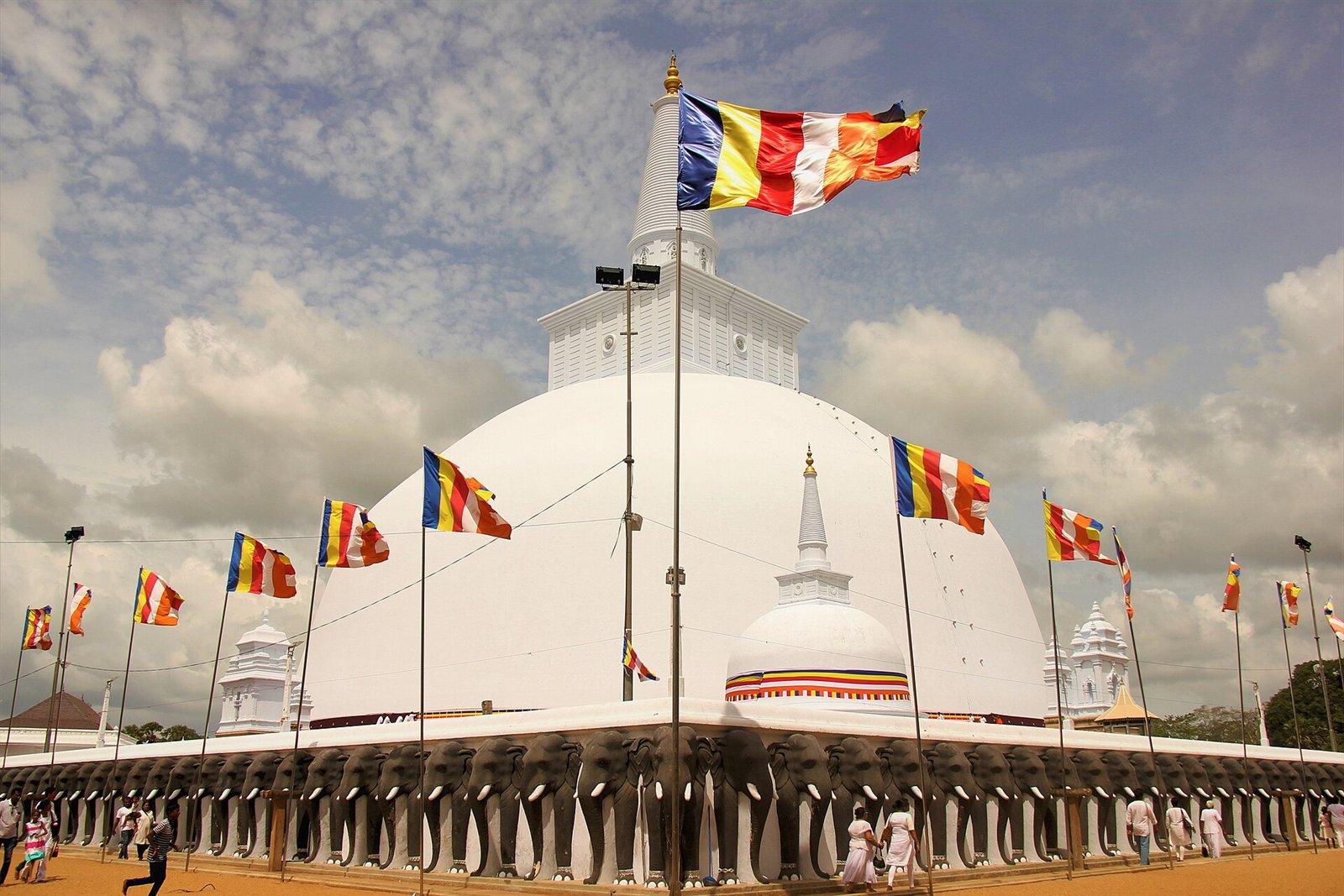
Ruwanwelisaya is the most striking of Anuradhapura's great stupas: a vast white dome rising from a paved courtyard, ringed by elephants carved in stone. It was built by King Dutugemunu in the second century BC and has been restored many times since, most recently in the twentieth century. For pilgrims it is a living shrine; for everyone else it is one of the finest ancient monuments in South Asia.
The sheer size is hard to grasp from photographs. Walk around the base and it takes a good ten minutes at a gentle pace. The whitewashed dome catches the early light, and the courtyard is quiet before the tour buses arrive.
What a stupa actually is
A stupa is not a temple in the Western sense. It is a solid, bell-shaped structure built to enshrine a relic, and it is designed to be circumambulated rather than entered. The dome represents the mound of earth over the Buddha's remains; the spire represents the path to enlightenment.
Ruwanwelisaya is believed to contain a relic of the Buddha, along with a large quantity of sacred objects and treasures deposited at its foundation. The building was as much a political statement as a religious one: Dutugemunu had just unified the island after defeating the southern king Elara, and a stupa of this scale announced the new order.
The elephants carved around the base are a distinctive feature. They stand shoulder to shoulder supporting the platform, a reference to the elephants that carried the building materials and, symbolically, to the strength of the kingdom.
Walking the sacred city
Ruwanwelisaya is the centrepiece, but it is one of several sites in the Sacred City, all within a few kilometres of each other. The Sri Maha Bodhi, grown from a cutting of the tree under which the Buddha attained enlightenment, is the oldest historically documented tree in the world and draws pilgrims from across the island.
The Brazen Palace, now a forest of stone pillars, was once a nine-storey monastery. Abhayagiri and Jetavanarama are enormous stupas, the latter probably the tallest brick structure ever built. The tanks — Basawakkulama, Tissa Wewa and Nuwara Wewa — are still in use after more than two thousand years.
Bicycles are the best way to move between the sites, and you can hire one near the entrance. A tuk-tuk is faster but less pleasant. Allow a full morning or afternoon, more if you want to see the museums.
- Sri Maha Bodhi: the sacred bodhi tree, a short walk from Ruwanwelisaya
- Brazen Palace: the pillars of a lost monastery
- Jetavanarama: a vast, partly restored stupa
- Abhayagiri: monastery ruins and a museum
- The ancient tanks: still holding water after two millennia
Etiquette at a living shrine
Dress for a religious site: shoulders and knees covered, shoes and hats removed. Many Sri Lankan visitors wear white, and you will feel more comfortable if you do the same. Sarongs are available at the entrance.
Walk clockwise around the stupa. Keep phone calls brief, do not sit with your back to the shrine, and do not take photographs of people praying without asking. The site is busiest on Poya days, when the full moon brings crowds of pilgrims and the atmosphere is at its most powerful.
Do not climb on the base or the elephants. There are usually volunteers or staff keeping an eye on things, but the responsibility is yours.
When to go and how long to allow
Early morning and late afternoon are best, both for the light and the temperature. Anuradhapura is hot year-round, and the paved courtyard radiates heat by midday. May to September is the driest season in the cultural triangle, but the difference is modest.
Allow at least half a day for the sacred city, preferably with a guide who can explain the history and the symbolism. Without context, a field of ruins is just a field of ruins. A good guide will connect the stupas, the tanks and the monarchy into something coherent.
Most visitors base themselves in Anuradhapura town, which has a range of hotels and guesthouses. It is a working provincial city rather than a resort, but it has good food and easy access to the sites. Two nights is comfortable; one is possible if you move quickly.
Practicalities and common mistakes
Ticket prices for foreign visitors are set by the Archaeological Department and change periodically. Confirm the current fee and whether it covers all the sites in the sacred city. Some tickets are valid for a day, which is why a well-planned route matters.
Do not underestimate the distance between sites. The sacred city covers several square kilometres, and walking between everything in the heat is a mistake. Bicycle, tuk-tuk or a hired car with a driver is the sensible approach.
Finally, do not treat Ruwanwelisaya as a photo backdrop. It is one of the most important religious sites in the country, and the people around you are not at a tourist attraction. Matching their pace and their quiet is the best way to see it.
Frequently asked questions
- How old is Ruwanwelisaya?
- It was built in the second century BC under King Dutugemunu, making it more than two thousand years old. It has been restored several times, most substantially in the twentieth century.
- Do you need a ticket for Ruwanwelisaya?
- Yes, foreign visitors need a ticket for the Sacred City, which covers the main sites including Ruwanwelisaya and the Sri Maha Bodhi. Confirm current prices and validity at the ticket office.
- How long does it take to visit Anuradhapura's sacred city?
- Half a day minimum, ideally a full day if you want to see the stupas, the bodhi tree, the museums and the tanks without rushing. Bicycles make it much easier.
- What should I wear to Ruwanwelisaya?
- Shoulders and knees covered, shoes and hats removed. White clothing is traditional and comfortable. Avoid bright beachwear and anything revealing.
Written by
Sahan Kalpa DayarathnaSahan Kalpa Dayarathna is the editor of Discover Sri Lanka, based in Colombo. He writes the province guides, hotel picks and practical travel advice on this site, and updates them as transport, prices and opening times change.
Story filed 6 July 2026 about Ruwanwelisaya. Explore more in North Central Province.
More traveller stories
13 July 2026
Gal Viharaya: Polonnaruwa's Rock-Cut Buddhas
Four colossal figures carved from a single granite rock — the artistic highlight of Polonnaruwa.
20 July 2026
Minneriya National Park: The Great Elephant Gathering
Hundreds of elephants around an ancient reservoir — when to go and how to safari responsibly.