- Province
- North Central Province, Polonnaruwa District
- Built
- Twelfth century, under King Parakramabahu I
- Contains
- Four Buddha images carved into one granite boulder
- Status
- Part of the UNESCO Ancient City of Polonnaruwa
- Time needed
- About an hour
- Best time
- Early morning or late afternoon
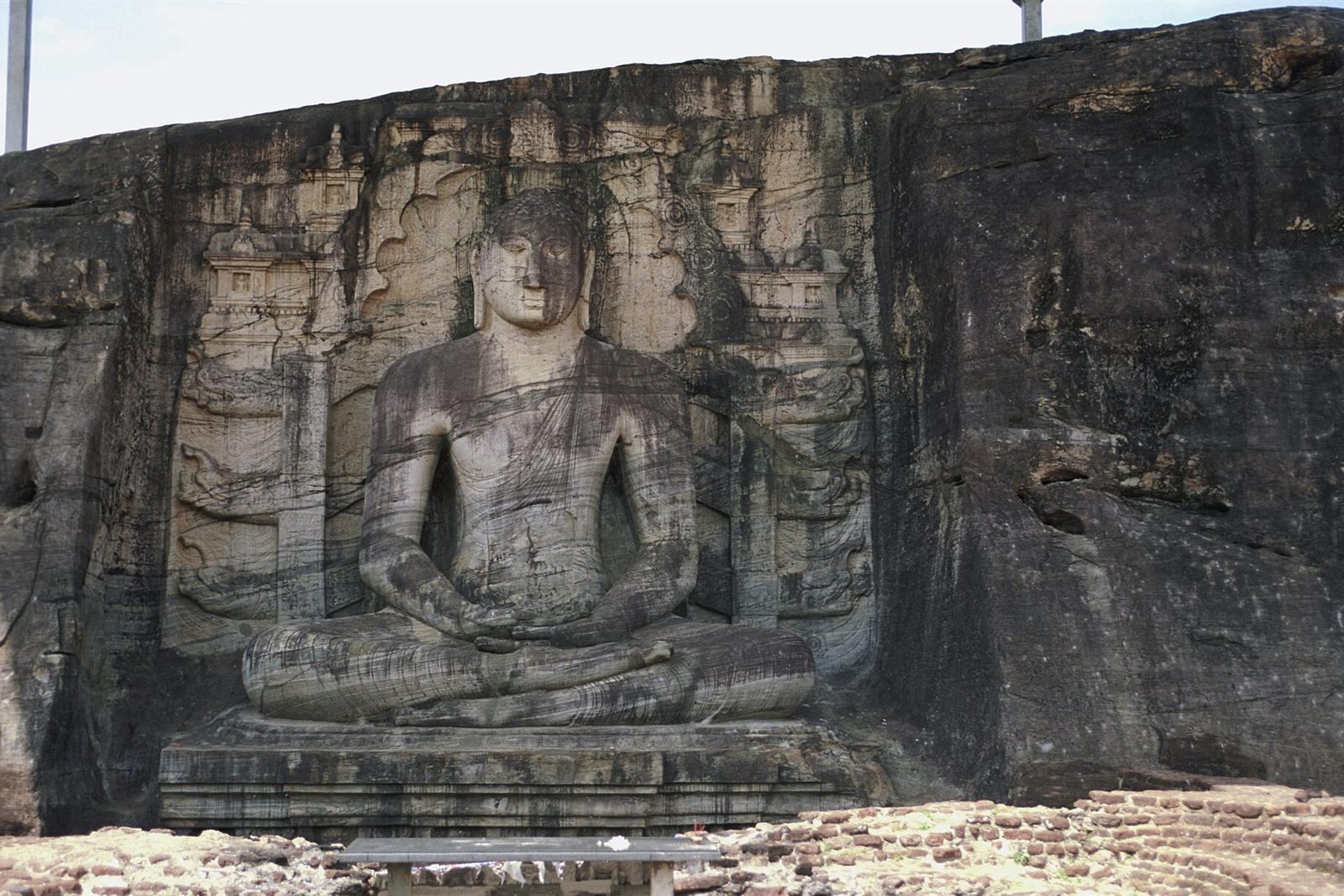
Gal Viharaya, the Rock Temple, is the artistic centrepiece of Polonnaruwa. Four Buddha images are carved directly into a single granite boulder: a seated figure in deep meditation, a standing figure, a large reclining Buddha entering parinirvana, and a smaller seated figure. The scale and smoothness of the carving are remarkable, and the way the light moves across the stone changes the mood throughout the day.
It was commissioned by King Parakramabahu I in the twelfth century, when Polonnaruwa was the island's capital. It sits within the royal city's archaeological zone, close to the Royal Palace, the Vatadage and the Rankoth Vehera.
The four images
The seated Buddha in meditation is the most refined of the group, with a calm, inward expression and a smoothness that makes the granite look soft. The standing figure beside it is taller and more formal, with the hand raised in a gesture of reassurance.
The reclining Buddha is the largest and the most photographed. It depicts the Buddha entering parinirvana, the final passing from the cycle of rebirth, and the pose is one of release rather than sleep. The smaller seated figure at the other end completes the group.
Look at the stone itself: the carvings are cut into a single boulder, and the uncarved rock frames them. That integration of sculpture and geology is what makes the site unusual.
- Seated Buddha: meditation, the most refined carving
- Standing Buddha: formal, hand raised in reassurance
- Reclining Buddha: parinirvana, the largest image
- The boulder itself: one rock, four figures
How to see it well
Allow an hour to sit with the images rather than rush through. Tour groups arrive mid-morning and again in the afternoon, so early morning is the calmest time to be alone with the stone.
The stone can be hot underfoot at midday, so carry socks or wear sandals that are easy to remove. There is little shade, and the site is exposed to the sun.
A guide is useful for context, especially if you are not familiar with Buddhist iconography. The site is an active place of worship, so remove shoes and hats and dress modestly.
Polonnaruwa beyond Gal Viharaya
Polonnaruwa is best explored by bicycle, and the route between the main monuments is flat and shaded in places. The archaeological site is spread out, so allow at least half a day.
The Vatadage, a circular shrine with a carved moonstone, is one of the finest structures on the island. The Rankoth Vehera is a vast stupa, and the Royal Palace ruins give a sense of the scale of the medieval capital.
The archaeological museum displays finds from the site and explains the shift from Anuradhapura to Polonnaruwa as the island's capital. It is a good first stop if you want context before the ruins.
Getting there and when to go
Polonnaruwa is about an hour and a half from Anuradhapura and two hours from Dambulla, making it easy to combine with Sigiriya or Minneriya. The dry season from May to September is the most comfortable, though the ruins are open year-round.
Bicycles can be hired near the main entrance, and they make the heat much more manageable. A tuk-tuk is faster but less pleasant, and a car with a driver is the most comfortable option for a half-day tour.
Carry water, wear a hat and remember that the stone can be scorching at midday. The site is at its best in the first two hours after opening and in the last two before closing.
A note on the name
Gal Viharaya translates simply as 'stone temple', and the name is used for several rock-cut Buddhist sites in Sri Lanka. This is the Polonnaruwa one, sometimes also called the Northern Temple or Uttararama.
That ambiguity matters when you are searching for directions or asking a tuk-tuk driver. Say 'Gal Viharaya, Polonnaruwa' and you will get the right place.
Frequently asked questions
- How old is Gal Viharaya?
- It was built in the twelfth century under King Parakramabahu I, when Polonnaruwa was the capital of Sri Lanka. It is part of the UNESCO Ancient City site.
- How long do you need at Gal Viharaya?
- About an hour to see the four images properly. Add time if you are exploring the wider Polonnaruwa site, which needs at least half a day.
- Do you need a ticket for Gal Viharaya?
- Yes, foreign visitors need a ticket for the Polonnaruwa archaeological zone, which covers Gal Viharaya and the other monuments. Confirm current prices at the ticket office.
- What should I wear to Gal Viharaya?
- Shoulders and knees covered, shoes and hats removed. The stone is hot at midday, so bring socks or easy-to-remove sandals.
Written by
Sahan Kalpa DayarathnaSahan Kalpa Dayarathna is the editor of Discover Sri Lanka, based in Colombo. He writes the province guides, hotel picks and practical travel advice on this site, and updates them as transport, prices and opening times change.
Story filed 13 July 2026 about Gal Viharaya. Explore more in North Central Province.
More traveller stories
6 July 2026
Ruwanwelisaya: The Great White Stupa of Anuradhapura
A two-thousand-year-old stupa at the heart of the sacred city — scale, symbolism and how to visit respectfully.
20 July 2026
Minneriya National Park: The Great Elephant Gathering
Hundreds of elephants around an ancient reservoir — when to go and how to safari responsibly.