- Province
- North Western Province, Kurunegala District
- Capital
- Briefly the island's capital in the 1270s and 1280s
- Height
- The rock rises about 100 m above the plain
- Known for
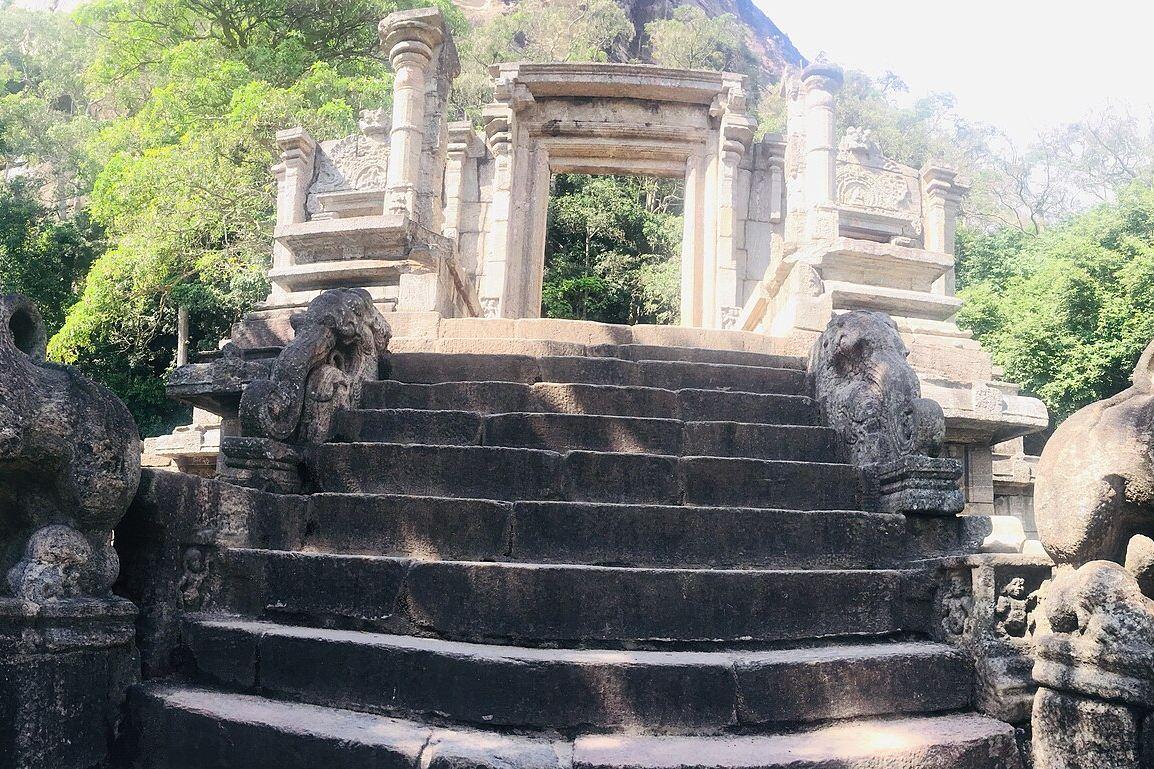
- The carved lion staircase and the palace terrace
- Time needed
- One and a half to two hours
- Best time
- Early morning or late afternoon
Yapahuwa is the kind of place that makes Sri Lanka's cultural triangle feel crowded by comparison. The thirteenth-century rock fortress rises abruptly from the plain near Kurunegala, topped by the remains of a royal citadel. For a brief period in the 1270s and 1280s it served as the island's capital, and the Sacred Tooth Relic was kept here before being moved south.
It is not a polished site. There are no audio guides and no reconstruction, just a rock, a staircase and a view — which is exactly why people who make the detour tend to remember it.
The staircase
The most photographed feature is the ornamental staircase, carved with lions and dancers, which climbs the rock face to the palace terrace. It is steep, narrow and worn, and it is the reason the site is worth the trip.
The carvings are among the finest in Sri Lanka: lions, makaras and dancing figures, cut into the rock with a confidence that suggests the sculptors were not in a hurry. Look at the details on the side panels, not just the steps under your feet.
The climb is short but steep, and a handrail helps. Wear shoes with grip, and take your time on the way down — the steps are worn smooth in the middle.
- Carved lions flanking the staircase
- Dancing figures and makara motifs on the side panels
- The palace terrace at the top of the stairs
- Views across the plain from the summit
The royal city that briefly was
Yapahuwa became the capital after the collapse of Polonnaruwa and the withdrawal of the kingdom southwards. It was a short-lived capital, vulnerable to attack, and it was abandoned within a few decades.
The Sacred Tooth Relic was kept here during that period, which gave the rock its importance. It was later moved to Kurunegala and eventually to Kandy, where it remains.
The site also includes ramparts, a moat, cave shelters and a small museum. The ruins are weathered, and you will need some imagination to picture the royal city. The museum helps, with finds and photographs of the excavations.
Visiting without the crowds
Go early in the morning or in the late afternoon to avoid the heat, and wear shoes with grip for the stone steps. The site is usually quiet, with only a handful of local visitors, so you can take your time.
There is a small entrance fee and limited facilities, so bring water and snacks. Monkeys are present and can be curious, so keep bags closed.
Allow a couple of hours to explore properly. The walk around the ramparts and the climb to the terrace are both worthwhile, and the museum adds context.
Getting there and what to pair with it
Yapahuwa is about an hour and a half from Kurunegala and around two hours from Anuradhapura, making it an easy stop on a cultural-triangle itinerary.
Combine it with Ridi Viharaya, another under-visited site near Kurunegala, and a night in the town. The drive passes paddy fields and coconut groves, and the roads are quiet.
December to April is the driest season in the north west, though the fortress is open year-round. It is one of the North Western Province's most atmospheric historic sites, and one of the few where you can hear the wind rather than a tour guide.
Why it is overlooked
Yapahuwa sits outside the main cultural triangle, which is why it gets a fraction of the visitors of Sigiriya or Polonnaruwa. That is part of its charm, and also part of its problem: conservation depends on visitor revenue.
The site is not heavily restored, so you will see genuine ruins rather than a reconstruction. Some people find that disappointing; others find it more honest.
If you have already done the big sites and want a day that feels like a discovery, this is the one. The name means 'market rock', a reminder that a town once grew around the fortress, trading with the surrounding villages and pilgrims.
Frequently asked questions
- Is Yapahuwa worth visiting?
- Yes, especially if you want a quieter alternative to Sigiriya. The carved staircase is genuinely fine, and the site is rarely crowded.
- How hard is the climb at Yapahuwa?
- Short but steep. The staircase is worn and narrow in places, so wear shoes with grip and take your time coming down.
- How far is Yapahuwa from Kurunegala?
- About an hour and a half by road. It also works as a stop between Anuradhapura and Kurunegala or Dambulla.
- Why was Yapahuwa a capital?
- It briefly served as the island's capital in the 1270s and 1280s after the shift south from Polonnaruwa. The Sacred Tooth Relic was kept here during that period.
Written by
Sahan Kalpa DayarathnaSahan Kalpa Dayarathna is the editor of Discover Sri Lanka, based in Colombo. He writes the province guides, hotel picks and practical travel advice on this site, and updates them as transport, prices and opening times change.
Story filed 31 August 2026 about Yapahuwa Fortress. Explore more in North Western Province.
More traveller stories
7 September 2026
Kalpitiya Peninsula: Kitesurfing, Dolphins and Lagoon Life
Sri Lanka's kitesurfing capital, with flat lagoon water, dolphin trips and empty beaches.
14 September 2026
Munneswaram Temple: Chilaw's Colourful Hindu Complex
A historic Shiva temple near Chilaw, known for its vivid gopuram and the Munneswaram festival.