Munneswaram Temple: Chilaw's Colourful Hindu Complex
By Sahan Kalpa Dayarathna · · 3 min read
- Province
- North Western Province, Puttalam District
- Location
- Near Chilaw, on the Colombo–Puttalam road
- Dedicated to
- Shiva, with shrines to Kali, Ganesha and Vishnu
- Festival
- The Munneswaram festival, usually August or September
- Distance
- About 1.5 hours from Colombo
- Time needed
- About an hour
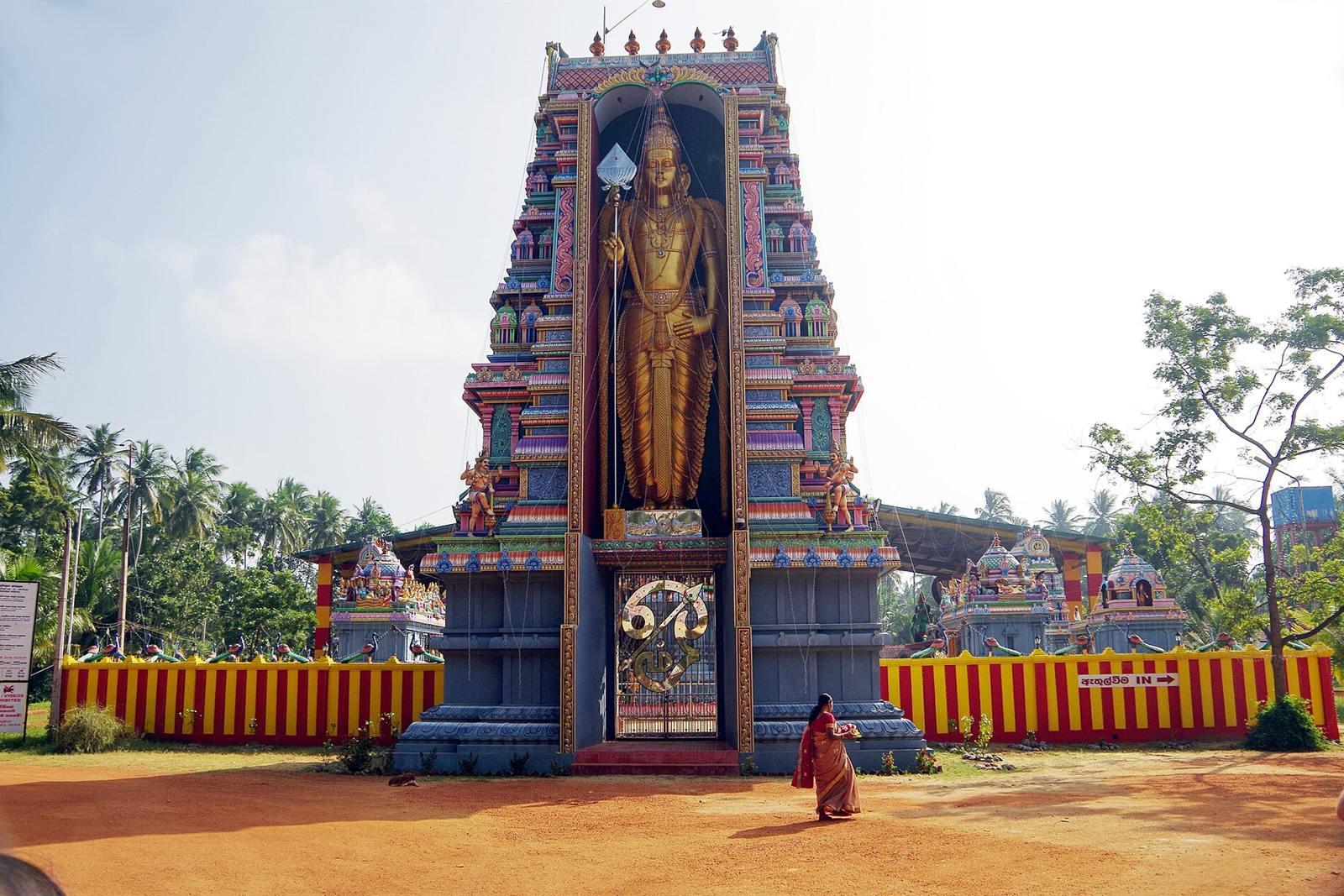
Munneswaram Temple stands near Chilaw, on the road between Colombo and Puttalam, and is one of the oldest and most important Hindu temple complexes in Sri Lanka. It is dedicated to Shiva and forms part of the network of ancient Ishwaram temples associated with the god. The site has been a place of pilgrimage for centuries, and its colourful gopuram is a landmark on the coastal plain.
It is also a reminder that the north-west is not uniformly Buddhist. This coast has a long history of Hindu and Muslim communities, and Munneswaram is the clearest expression of that mix.
The complex and its shrines
The complex includes several shrines, including temples to Kali, Ganesha and Vishnu, arranged around a tank. The architecture is Dravidian in style, with carved pillars, painted ceilings and a tall entrance tower covered in figures.
The Kali shrine is particularly popular, and the atmosphere there is different from the main Shiva temple: more intense, with offerings and incense and a steady stream of devotees.
The tank is used for ritual bathing and for the annual water-cutting ceremony, which draws devotees from across the region. It is a peaceful spot between the shrines, and a good place to sit for a few minutes.
The festival
During the Munneswaram festival, usually held in August or September, the temple draws large crowds for processions and fire-walking rituals. It is one of the biggest Hindu festivals in the country.
The fire-walking is the most dramatic element, with devotees walking across hot coals after days of preparation and purification. It is a religious act rather than a show, and should be watched with respect.
If you attend, expect crowds, heat and noise. Dress modestly, keep your distance from the processions, and do not step in front of a devotee for a photograph.
- Processions with decorated chariots
- Fire-walking towards the end of the festival
- Water-cutting ceremony at the tank
- Expect crowds and limited parking
Etiquette
Dress modestly and remove shoes before entering the sacred areas. Photography rules vary, so ask before taking pictures of worshippers or the inner shrines.
The temple is an active place of worship, not a monument, so keep voices low and avoid blocking pathways. If you are unsure about a ritual, watch from a respectful distance rather than trying to participate.
Do not touch offerings or walk between a devotee and a shrine. A small donation at the office is appropriate if you have spent time inside.
Getting there and when to go
The temple is about an hour and a half from Colombo and makes an easy stop on the way to Kalpitiya or Chilaw. Allow an hour to walk the complex.
The dry season from December to April is the most comfortable time to visit, though the festival atmosphere in August and September is worth planning around.
Chilaw itself is a small coastal town with a fishing harbour and a market. It is not a destination in its own right, but it is a useful stop and a real place rather than a tourist construct.
Why it matters
Munneswaram is one of the sites that demonstrates how long Hinduism has been present in Sri Lanka, well beyond the Tamil north. The coastal belt has been connected to south India by trade and migration for millennia.
That history is often flattened in the way Sri Lanka is described abroad — as a Buddhist island with a Tamil minority in the north. The reality is more layered, and the north-west is where you see it most clearly.
It is a vivid introduction to the North Western Province's religious diversity, and a worthwhile hour on any journey up the coast.
Frequently asked questions
- Is Munneswaram Temple worth visiting?
- If you are travelling up the coast or interested in Sri Lanka's Hindu heritage, yes. It is an easy stop and the gopuram is striking.
- What is the dress code at Munneswaram?
- Shoulders and knees covered, shoes removed before the sacred areas. Dress modestly and follow the instructions of temple staff.
- When is the Munneswaram festival?
- Usually in August or September, ending with fire-walking and a water-cutting ceremony at the temple tank.
- How far is Munneswaram from Colombo?
- About an hour and a half by road, near Chilaw on the Colombo–Puttalam road. It pairs well with a trip to Kalpitiya.
Written by
Sahan Kalpa DayarathnaSahan Kalpa Dayarathna is the editor of Discover Sri Lanka, based in Colombo. He writes the province guides, hotel picks and practical travel advice on this site, and updates them as transport, prices and opening times change.
Story filed 14 September 2026 about Munneswaram Temple. Explore more in North Western Province.
More traveller stories
31 August 2026
Yapahuwa Fortress: The Forgotten Rock Capital
A thirteenth-century rock fortress with a ceremonial staircase — and hardly any crowds.
7 September 2026
Kalpitiya Peninsula: Kitesurfing, Dolphins and Lagoon Life
Sri Lanka's kitesurfing capital, with flat lagoon water, dolphin trips and empty beaches.