Sinharaja Forest Reserve: Sri Lanka's Last Great Rainforest
By Sahan Kalpa Dayarathna · · 4 min read
- Province
- Sabaragamuwa and Southern, on the boundary
- Status
- UNESCO World Heritage Site and biosphere reserve
- Size
- About 89 km² of core protected forest
- Access points
- Kudawa, Deniyaya and Pitadeniya
- Best months
- January to March, the driest window
- Guide
- Required; arrange at the entrance or with your guesthouse
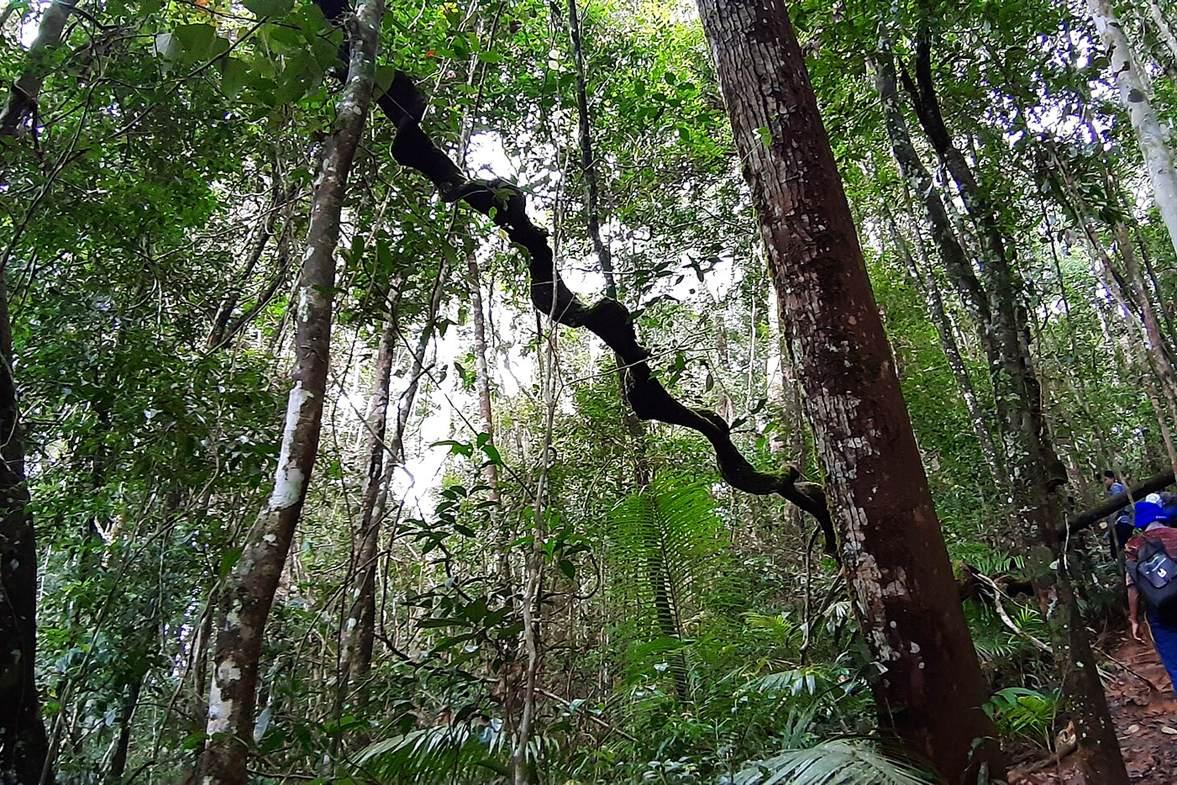
Sinharaja is the largest remaining tract of lowland rainforest in Sri Lanka and a UNESCO World Heritage Site. The name means "lion kingdom", though the lions are long gone; what remains is a dense, layered canopy of towering trees, lianas, ferns and orchids, and a soundtrack of birds and insects that never quite stops. It is one of the most important biodiversity hotspots in South Asia.
It is also genuinely wet. Sinharaja receives some of the highest rainfall in the country, and the forest is not a place for a casual stroll in sandals. The reward is a landscape that feels older and more crowded with life than anywhere else on the island.
What lives in the forest
Sinharaja holds a long list of endemic species, including the Sri Lanka blue magpie, the red-faced malkoha, the Sri Lanka junglefowl and several frogs, lizards and butterflies found nowhere else. Many of the birds are mixed-species flocks that move through the canopy together — a behaviour that makes a good guide worth twice the fee.
The trees themselves are extraordinary. Some rise more than forty metres, buttressed at the base and draped in epiphytes. Fig trees feed the canopy, and the streams that run out of the reserve supply the lowlands with water.
You will not see everything. Most visitors see a fraction of the bird list and no mammals at all, because the forest is dense and the animals are shy. What you will notice is the sound and the scale.
- Sri Lanka blue magpie: the signature endemic bird
- Red-faced malkoha: shy, usually in mixed flocks
- Purple-faced langur: troops in the canopy near the trails
- Giant squirrels and a long list of frogs and lizards
Choosing an entrance and a trail
There are three main access points, and they are not interchangeable. Kudawa, in the west, is the most developed and has the best guide infrastructure. Deniyaya, in the south, is quieter and gives access to different trails. Pitadeniya, also in the south, is a smaller entry point.
Walks range from a few hours to a full day. The terrain is muddy, steep in places and alive with leeches after rain. The classic Kudawa routes take in waterfalls and viewpoints, and there is a longer trail to the Sinhagala peak for fit walkers.
Entry is regulated and a licensed guide is required. Arrive early; the forest is at its best in the first hours of daylight, and the afternoon often brings rain.
Leeches, mud and what to wear
Leech socks are not a joke. In the wetter months the forest is full of them, and they will find any gap. Wear long trousers tucked into socks, or proper leech socks if your guesthouse provides them. Boots with grip are better than trainers.
Bring a rain jacket, a dry bag for camera gear, water and a snack. Do not bring food in noisy packaging, and do not feed anything. A torch is useful if you are out late, and binoculars transform the walk.
Insect repellent helps with mosquitoes but not much with leeches. Check your legs and boots after the walk, and remove leeches gently with salt or a fingernail rather than pulling.
Where to stay
Guesthouses cluster around Kudawa and Deniyaya, ranging from basic rooms to small eco-lodges. Staying close to the entrance means you can start at first light, which is the single best decision you can make.
The nearest towns are Deniyaya and Ratnapura, both reachable by road from Colombo. Ratnapura is about two hours away and makes a natural base for combining Sinharaja with Adam's Peak.
Food is usually arranged with your guesthouse, and it is worth taking the rice and curry rather than hunting for restaurants. Mobile signal is patchy, and power can be intermittent.
Visiting responsibly
The forest is not a place for loud groups or drones. Go with a small group, move slowly and let the sounds of the rainforest come to you. Playback of bird calls is controversial and should only be done by a guide who knows when to stop.
Stay on the trail. The undergrowth is fragile, and stepping off the path damages seedlings and disturbs nesting birds. Carry out everything you bring in.
January to March is the driest window, but the rainforest is wet by definition and can rain at any time. Sinharaja is not a quick stop, but for anyone interested in nature it is one of the Sabaragamuwa Province's essential experiences.
Frequently asked questions
- Do you need a guide for Sinharaja?
- Yes. Entry is regulated and a licensed guide is required. Guides are arranged at the entrance or through your guesthouse, and a good one will find far more than you would alone.
- Are there leeches in Sinharaja?
- Yes, especially in the wetter months. Wear long trousers tucked into socks or leech socks, and check your legs after the walk.
- What is the best time to visit Sinharaja?
- January to March is the driest window, but it rains year-round. Start early in the morning for the best birding and the least rain.
- How long does a Sinharaja walk take?
- From a few hours to a full day, depending on the trail and the entrance. Most visitors do a half-day walk and are back by lunchtime.
Written by
Sahan Kalpa DayarathnaSahan Kalpa Dayarathna is the editor of Discover Sri Lanka, based in Colombo. He writes the province guides, hotel picks and practical travel advice on this site, and updates them as transport, prices and opening times change.
Story filed 15 June 2026 about Sinharaja Forest. Explore more in Sabaragamuwa Province.
More traveller stories
8 June 2026
Adam's Peak: Climbing Sri Lanka's Sacred Mountain
The overnight pilgrimage to Sri Pada — what to pack, when to go and what happens at the summit.
22 June 2026
Udawalawe National Park: Elephants, Tanks and an Easy Safari
One of the most reliable places to see wild elephants in Sri Lanka, with open plains and a short drive from the south coast.