- Province
- North Western Province, Kurunegala District
- Location
- Near Ridigama, about an hour from Kurunegala
- Founded
- Traditionally second century BC
- Known for
- Cave shrines, murals, carved timber and the silver legend
- Time needed
- About an hour
- Best time
- Morning, before the heat builds
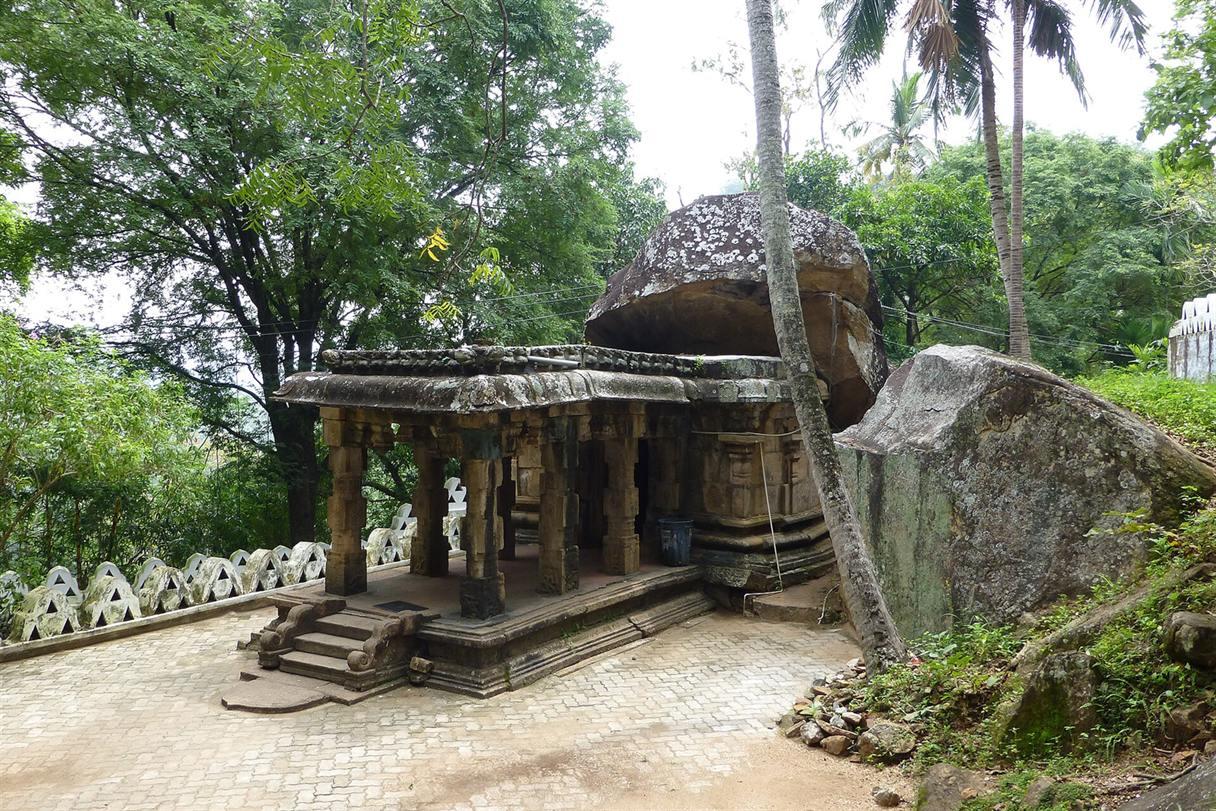
Ridi Viharaya, the Silver Temple, sits in a low rock outcrop near Ridigama, about an hour from Kurunegala. According to tradition, the temple was founded in the second century BC after a merchant discovered silver ore here and donated the find to King Dutugemunu for the construction of the Ruwanwelisaya stupa. The name Ridi means silver, and the story gives the site its enduring identity.
It is a small, quiet place — the kind of site that gets skipped by tour buses and rewarded by anyone who makes the detour.
The silver legend
The story goes that a merchant named Hendaka, travelling through the area, found a vein of silver and reported it to the king. Dutugemunu, who was building the great Ruwanwelisaya stupa at Anuradhapura, used the silver to fund the work, and the merchant was rewarded with land on which to build a temple.
Whether or not the details are accurate, the connection to Ruwanwelisaya gives the site a place in the island's larger story. It is a reminder that the great stupas were funded by networks of trade and patronage, not just royal treasury.
Ask a monk or guide to explain the connection if you are interested; they are usually happy to talk about it, and it makes the small shrine room feel more significant.
What to see inside
The temple is built around a series of caves and rock shelters, with a shrine room, a stupa and a collection of Buddha images. The interior is intimate rather than monumental, with painted ceilings, carved timber and old murals that reward close attention.
The murals are not as famous as those at Dambulla, but they have a charm of their own: faded colours, dense patterns and a domestic scale. Look up, and look at the door frames.
It is a working monastery, so you may see monks and devotees going about their day. Give them space and keep noise to a minimum.
- Cave shrine room with painted ceilings
- Carved timber door frames and pillars
- A small stupa on the rock terrace
- Old murals in the surrounding caves
Etiquette and practicalities
Dress modestly, remove shoes and hats at the shrine areas, and keep noise to a minimum. The site is small enough to see in an hour, and the surrounding countryside is peaceful.
Facilities are limited, so bring water. There is no café and no shop worth relying on, and the nearest town is a short drive away.
The temple is usually quiet, which makes a welcome contrast to the bigger cultural sites. Mornings are the best time, before the heat builds and the light softens.
Getting there and what to pair with it
Ridi Viharaya is easily combined with Yapahuwa or a stop in Kurunegala. The drive from Kurunegala passes paddy fields and coconut groves, and the temple is a good stop on the way to Yapahuwa or Dambulla.
The driest months are December to April, though the temple is open year-round. The roads are quiet, and a tuk-tuk or car with a driver is the easiest way to visit both sites in a day.
Allow an hour here and two hours at Yapahuwa, with lunch in between. It makes a gentle, rewarding day in the North Western Province.
Why it is worth the detour
The temple's setting is part of its appeal. The rock outcrop, the trees and the quiet courtyard make it feel removed from the busy road, and the small scale is a relief after the big stupas.
It is not the most famous site in the province, but it is one of the most atmospheric, and the silver-mining legend gives it a place in the island's larger story.
If you are interested in the quieter side of Sri Lankan Buddhism — the village temples, the cave shrines, the places where people still come to pray rather than to photograph — this is the kind of stop that makes a trip.
Frequently asked questions
- Is Ridi Viharaya worth visiting?
- Yes, if you are in the Kurunegala area. It is small, quiet and atmospheric, and pairs well with Yapahuwa.
- Why is it called the Silver Temple?
- Tradition says a merchant discovered silver ore here and donated it to King Dutugemunu for the building of Ruwanwelisaya. Ridi means silver.
- How long do you need at Ridi Viharaya?
- About an hour. The site is compact, and the shrine rooms and caves are close together.
- How far is Ridi Viharaya from Kurunegala?
- About an hour by road, near Ridigama. It is easily combined with Yapahuwa on a day trip.
Written by
Sahan Kalpa DayarathnaSahan Kalpa Dayarathna is the editor of Discover Sri Lanka, based in Colombo. He writes the province guides, hotel picks and practical travel advice on this site, and updates them as transport, prices and opening times change.
Story filed 21 September 2026 about Ridi Viharaya. Explore more in North Western Province.
More traveller stories
31 August 2026
Yapahuwa Fortress: The Forgotten Rock Capital
A thirteenth-century rock fortress with a ceremonial staircase — and hardly any crowds.
7 September 2026
Kalpitiya Peninsula: Kitesurfing, Dolphins and Lagoon Life
Sri Lanka's kitesurfing capital, with flat lagoon water, dolphin trips and empty beaches.