Pasikudah Beach: The Shallow Lagoon on Sri Lanka's East Coast
By Sahan Kalpa Dayarathna · · 5 min read
- Province
- Eastern Province, Batticaloa District
- Location
- About 35 km north of Batticaloa
- Season
- May to September, the east-coast dry season
- Water
- Shallow for hundreds of metres; warm and calm in season
- Good for
- Families, cautious swimmers, slow beach holidays
- Time needed
- Two to three nights
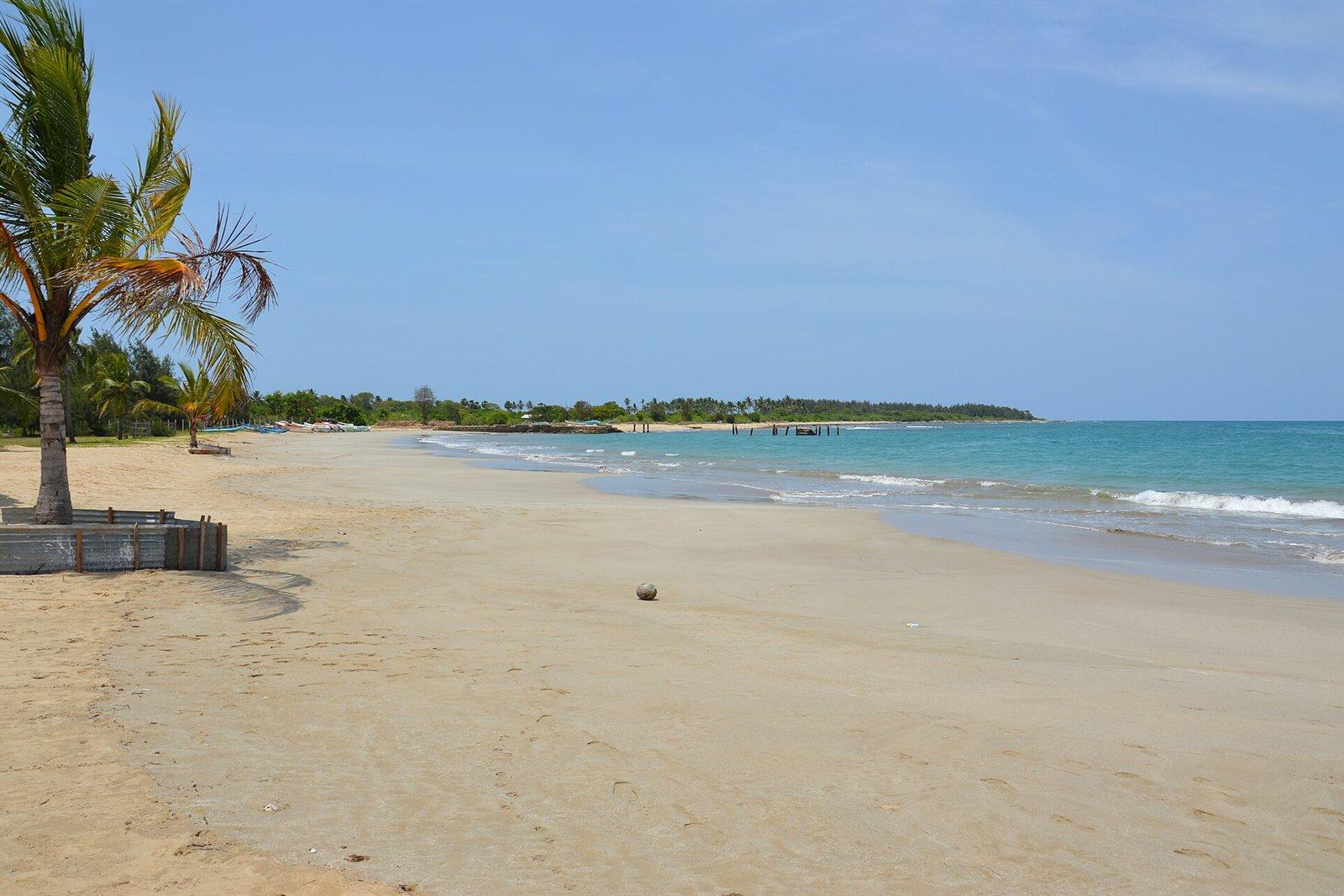
Pasikudah is a small bay north of Batticaloa where the sea stays shallow for a long way out. You can wade a hundred metres from the sand and still be waist-deep, which makes it one of the safest and most inviting swimming spots in Sri Lanka. The water is warm, the sand is soft and the curve of the bay keeps the worst of the swell away in season.
It is a resort beach rather than a traveller town: a strip of hotels behind the sand, a quiet road, and not much else. That suits some people perfectly and bores others, which is worth knowing before you book.
Why the water is so shallow
Pasikudah sits behind a fringing reef that breaks the swell before it reaches the beach. The result is a broad, shallow lagoon-like shelf of warm water, with a sandy bottom and almost no current.
This makes it unusually good for children and for anyone nervous about the sea. It also means the water can get very warm by afternoon, and there is limited snorkelling compared with Pigeon Island or Hikkaduwa.
Further out, beyond the reef, the depth drops and the sea is more exposed. Do not swim past the visible line of breakers, and ask locally about conditions after heavy rain.
The town and its recent history
Pasikudah was badly affected by the 2004 tsunami and, later, by the civil war, and its recovery has been uneven. A strip of resorts now runs along the beach, offering the kind of easy, self-contained holiday that families and couples enjoy.
Outside the hotel grounds, the town is quiet, with a few shops and local eateries. It is not the place for nightlife or a busy traveller scene, and the contrast between the resorts and the surrounding villages is visible.
Spending locally — eating at small restaurants, using local guides and buying from the market — makes a difference in a region that is still rebuilding.
What to do beyond swimming
Batticaloa, about an hour south, is worth a half-day for its lagoon, old churches and distinctive Tamil-Muslim culture. The singing fish legend is more folklore than spectacle, but the boat trip is pleasant.
Boat trips and lagoon excursions can be arranged locally. The nearby coast has a few small temples and fishing villages that are easy to visit by tuk-tuk.
Most people, though, come here to swim, eat seafood, read and sleep. That is a perfectly good itinerary, and the beach rewards it.
- Batticaloa lagoon and old town: half a day
- Local boat trips: arrange the price before boarding
- Fishing villages: ask before photographing
- Seafood: fresh and inexpensive along the coast
When to go and what to expect
May to September is the east-coast dry season, when the bay is at its best. The north-east monsoon from October to January brings rain and rougher water, and some hotels close.
The beach is best in the early morning before the sun gets strong. Sunsets are gentle rather than dramatic, and the evenings are quiet.
Book ahead in July and August, when Sri Lankan families travel and the resorts fill up. Outside those months, you can often arrive and find a room.
Getting there
Pasikudah takes about five to six hours from Colombo by road, or a combination of train to Batticaloa and a short drive north. The train journey is scenic but slow.
Once there, tuk-tuks handle the short trips to Batticaloa and the surrounding villages. A scooter is useful if you want to explore independently, but the roads are quiet and the distances short.
Stay two or three nights, swim in the morning, eat seafood in the afternoon and do very little else. It is the Eastern Province's easiest beach for families, and a good complement to the surf culture of Arugam Bay further south.
Batticaloa: the lagoon town next door
Batticaloa is one of the oldest towns in the east and has a character quite different from Trincomalee. It sits on a lagoon, connected to the sea by a narrow channel, and the old town still has Dutch and British buildings, churches and a busy market.
The lagoon is famous for the 'singing fish' — a phenomenon reported for centuries, in which sounds like music are said to come from the water on certain nights. It is more folklore than spectacle, and you should not book a trip expecting a concert. The boat ride at dusk is pleasant regardless.
The town is predominantly Tamil and Muslim, with a strong cultural life and excellent food. The market is worth an hour, and the old Dutch fort area is a quiet place to walk. It is not polished for tourists, and it does not need to be.
What to know before you book
Pasikudah is a resort beach, and the resorts are mostly self-contained. If you want to eat outside the hotel, check what is within walking distance first; some properties are isolated along the road.
The east coast is seasonal, and outside May to September many places shut down entirely. Travelling in the monsoon means closed restaurants, rough seas and a much quieter town.
Cash matters. ATMs are limited outside Batticaloa, and not every small restaurant takes cards. Bring enough rupees for a few days.
Frequently asked questions
- Is Pasikudah good for families?
- Yes. The water is shallow for a long way out and usually calm in season, which makes it one of the safest beaches in Sri Lanka for children.
- When is the best time to visit Pasikudah?
- May to September, during the east-coast dry season. The north-east monsoon brings rain and rougher water from October to January, and some hotels close.
- Is there snorkelling at Pasikudah?
- Limited. The shallow sandy shelf is not a reef, so serious snorkelling is better at Pigeon Island near Nilaveli or at Hikkaduwa.
- How far is Pasikudah from Batticaloa?
- About 35 km, or roughly an hour by road. Batticaloa has the nearest railway station and a wider range of shops and restaurants.
Written by
Sahan Kalpa DayarathnaSahan Kalpa Dayarathna is the editor of Discover Sri Lanka, based in Colombo. He writes the province guides, hotel picks and practical travel advice on this site, and updates them as transport, prices and opening times change.
Story filed 4 May 2026 about Pasikudah Beach. Explore more in Eastern Province.
More traveller stories
13 April 2026
Arugam Bay: Surf, Lagoon and the Slow East Coast
A world-class right-hand point break, laid-back cafés and a coastline that stays quiet outside season.
20 April 2026
Koneswaram Temple: Trincomalee's Cliff-Top Shiva Shrine
A Hindu temple above the harbour, with a sacred spring, cliff views and a history stretching back centuries.