- Province
- Eastern Province, Ampara District
- Season
- Roughly April to October; June–August is peak
- The wave
- A long right-hand point break over a rocky bottom
- Other breaks
- Whiskey Point, Peanut Farm, Pottuvil Point, Elephant Rock
- Getting there
- 6–7 hours by road from Colombo; 3–4 from Ella
- Suggested stay
- At least three nights
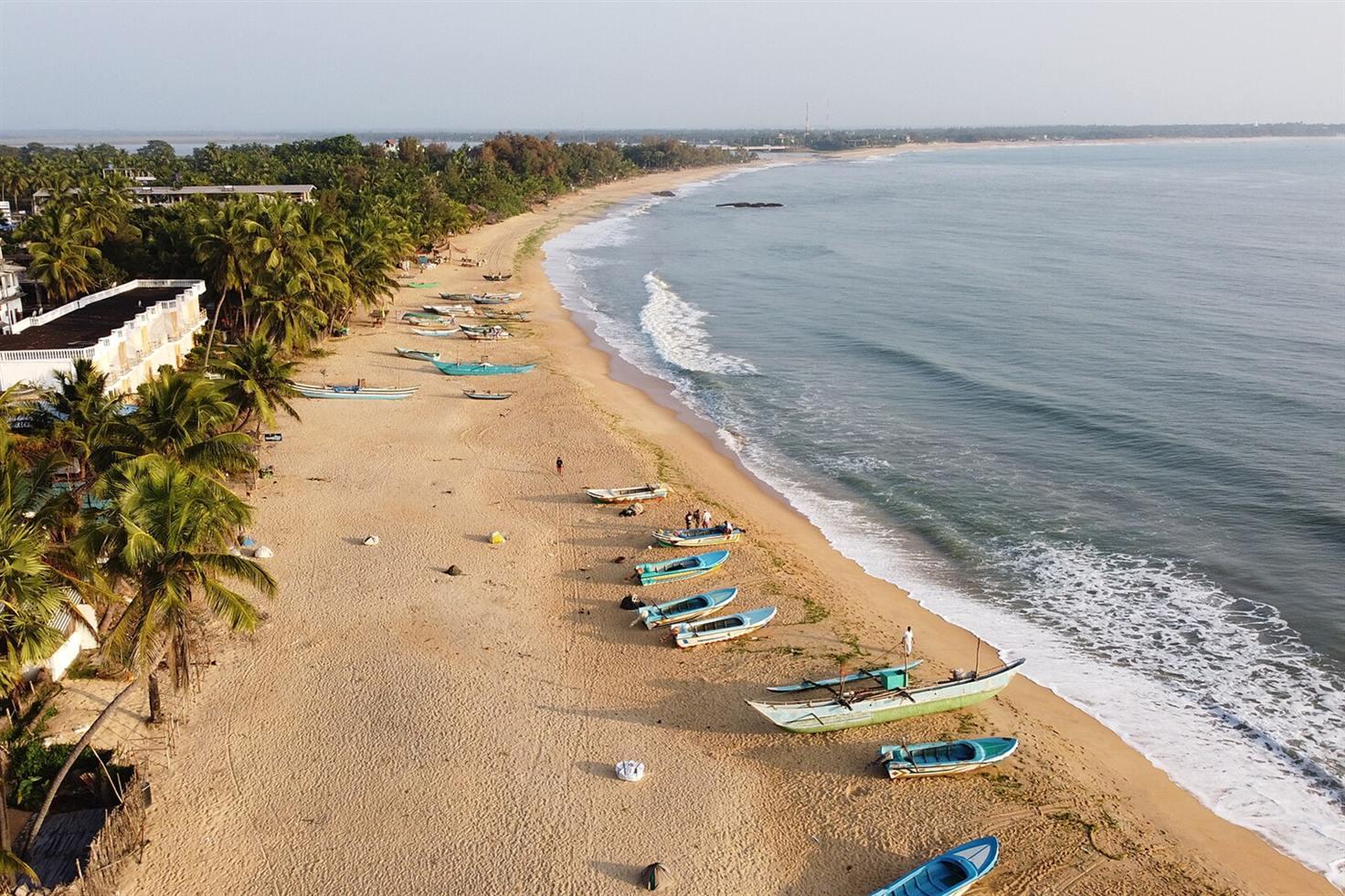
Arugam Bay is a crescent of sand on Sri Lanka's east coast with one of the most celebrated point breaks in Asia. The main wave peels right for hundreds of metres over a rocky bottom, and the surrounding beaches — Whiskey Point, Peanut Farm and Pottuvil Point — offer alternatives for different swell and skill levels. Between sessions, the town is a cluster of cafés, surf shops and guesthouses where nobody is in a hurry.
It is also the clearest example of how Sri Lanka's two monsoons work. When the south-west monsoon is lashing the south coast, the east coast is dry, offshore and firing. That is why surfers plan their whole trip around which side of the island they are on.
When to go, and why the season is what it is
The south-west monsoon, roughly May to September, brings swell to the east coast and dry weather to Arugam Bay. The result is clean, consistent surf and blue skies while the south coast is wet. Peak season is June to August, when the bay fills with surfers from Europe, Australia and Israel.
April and October are shoulder months: quieter, cheaper and less predictable. The town partially closes in November and December, when the north-east monsoon arrives and the bay turns grey and choppy. If you are coming for surf, do not book outside the season and hope for the best.
The surf, honestly
The main point is a right-hand wave that can be long, fast and crowded. It is not a beginner break on a decent swell, and the rocky bottom punishes mistakes. Several schools operate on the beach, and a lesson or two is worth it if you are new — they will take you to a softer break nearby rather than straight into the lineup.
Whiskey Point, about twenty minutes north, is mellower and popular with longboarders. Peanut Farm, south of town, has a more forgiving wave and a beautiful setting. Pottuvil Point is for experienced surfers when the swell is big, and Elephant Rock is another option when the main point is crowded.
Respect the lineup. Local surfers and long-staying visitors have priority on the best days, and dropping in on someone is not a small offence. If you are unsure, watch for twenty minutes before paddling out.
- Main point: long right-hander, best for intermediate and advanced surfers
- Whiskey Point: mellower, good for longboards and improvers
- Peanut Farm: softer wave, relaxed crowd, south of town
- Pottuvil Point: heavier, for experienced surfers on bigger swells
Beyond the surf
Pottuvil Lagoon, just north of the bay, is good for early-morning boat trips: crocodiles, monkeys, kingfishers and a quiet channel through mangrove. Agree the price and duration before you get in the boat, and make sure life jackets are provided.
Kumana National Park, about an hour south, is a remote, rewarding safari destination with elephants, leopards and huge numbers of birds. It is far quieter than Yala and requires a jeep and guide. Muhudu Maha Viharaya, a small ancient temple near Pottuvil, is worth a stop on the way.
The town has a strong Muslim and Tamil character. Dress a little more conservatively away from the beach, ask before photographing people or fishing boats, and keep the beach clean.
Where to stay and what to eat
Accommodation ranges from simple rooms behind a surf shop to small boutique hotels with pools. Prices rise sharply in July and August, and the best places book out weeks ahead. Outside peak season you can usually arrive and find something, but do not count on it during a good swell.
Food is a mix of Sri Lankan, Western and Middle Eastern, with plenty of vegetarian options and smoothie bowls aimed at surfers. The local rice and curry is better value and more interesting than the imported café food, and the fish is fresh. Pottuvil has a market and a more local feel if you want to eat where the town eats.
Getting there and getting around
The drive from Colombo takes six to seven hours, and most people break the journey or take an overnight bus. From Ella or the hill country, the route through Monaragala and Pottuvil takes three to four hours by road, which makes Arugam Bay a natural next stop after the tea estates.
Once there, everything in town is walkable. Tuk-tuks handle the surf breaks, the lagoon and Pottuvil. If you are staying for a week or more, renting a scooter is common, but the roads are narrow and the local driving style takes some getting used to.
Give it at least three nights. The rhythm of the place — dawn surf, a long sleep through the heat, fish and rice in the evening — is the point, and a two-night stop just scratches the surface.
Frequently asked questions
- When is the best time to visit Arugam Bay?
- June to August for the most consistent surf and peak atmosphere. April to October is the season overall, with quieter shoulder months in April and October.
- Is Arugam Bay good for beginner surfers?
- Yes, but not at the main point on a solid swell. Take a lesson and let the school take you to a softer break such as Whiskey Point or Peanut Farm before you try the main wave.
- How do you get to Arugam Bay?
- By road from Colombo, which takes six to seven hours, or from Ella, which takes three to four. There is no railway to the bay. Most travellers arrive by private car, van or overnight bus.
- Is Arugam Bay expensive?
- Outside peak season it is good value. In July and August, accommodation prices rise sharply and the best places fill up, so book ahead if you are travelling then.
Written by
Sahan Kalpa DayarathnaSahan Kalpa Dayarathna is the editor of Discover Sri Lanka, based in Colombo. He writes the province guides, hotel picks and practical travel advice on this site, and updates them as transport, prices and opening times change.
Story filed 13 April 2026 about Arugam Bay. Explore more in Eastern Province.
More traveller stories
20 April 2026
Koneswaram Temple: Trincomalee's Cliff-Top Shiva Shrine
A Hindu temple above the harbour, with a sacred spring, cliff views and a history stretching back centuries.
27 April 2026
Nilaveli Beach: White Sand, Pigeon Island and Calm East-Coast Water
A long, quiet beach north of Trincomalee with snorkelling trips to Pigeon Island and a genuinely slow pace.