Nilaveli Beach: White Sand, Pigeon Island and Calm East-Coast Water
By Sahan Kalpa Dayarathna · · 5 min read
- Province
- Eastern Province, Trincomalee District
- Location
- About 16 km north of Trincomalee
- Season
- May to September, the east-coast dry season
- Main excursion
- Pigeon Island National Park, a short boat ride offshore
- Swimming
- Calm and clear in season; can be rough in the monsoon
- Time needed
- Two to three nights
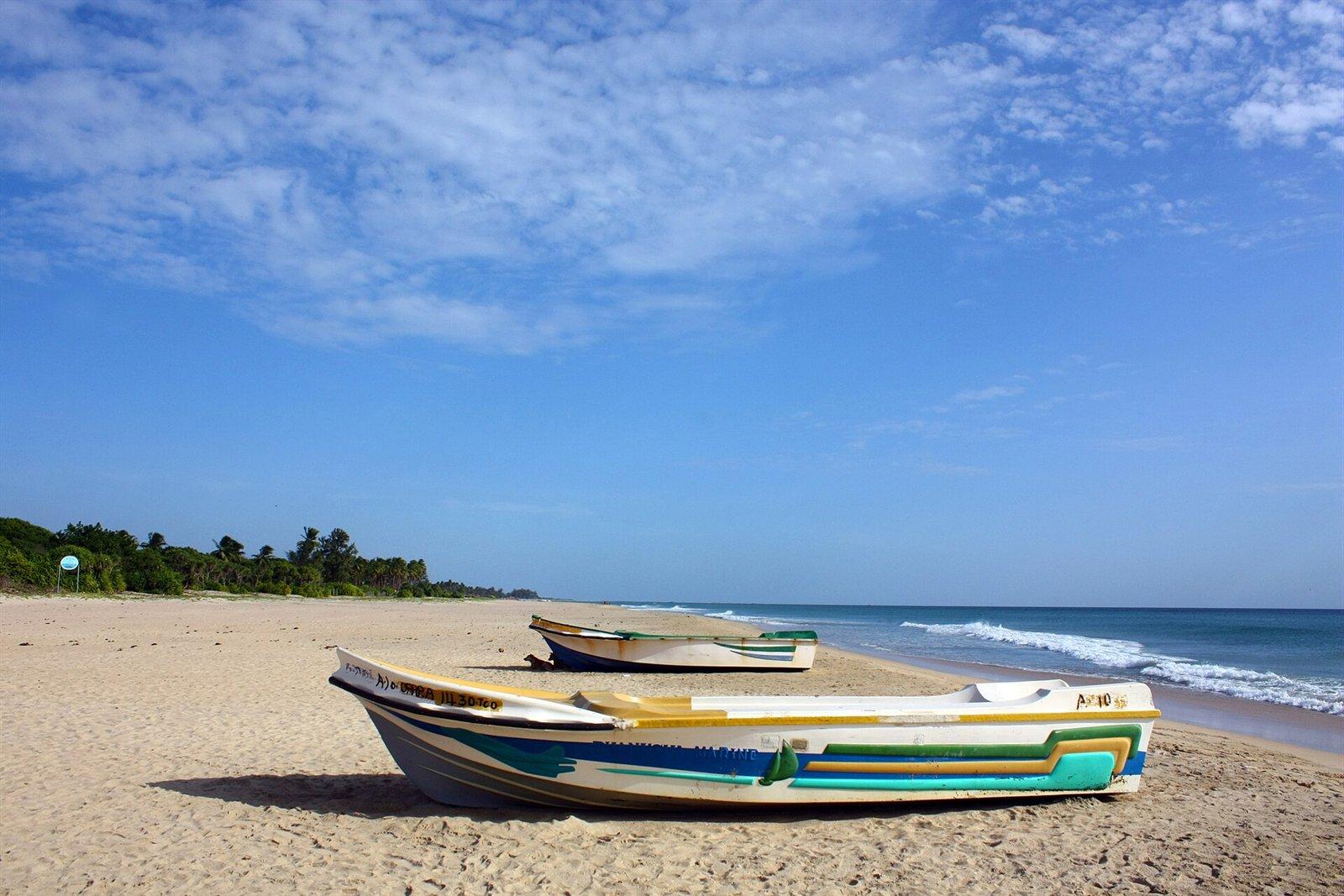
Nilaveli is a long, wide beach about sixteen kilometres north of Trincomalee, and it feels a world away from the busier south coast. The sand is pale, the water is clear and calm in season, and the development is low-rise and spread out. It is the kind of beach where you can walk for an hour and pass only a handful of people, especially outside the peak months.
The reason most people choose it over Uppuveli or Pasikudah is Pigeon Island, a small marine national park just offshore with some of the best snorkelling on the east coast.
Pigeon Island and the snorkelling
Pigeon Island is a pair of small islands about a kilometre offshore, protected as a national park. Boats leave from Nilaveli beach throughout the morning, and the trip takes only a few minutes.
The reef holds reef sharks, green turtles, parrotfish, angelfish and healthy hard coral in shallow water. It is genuinely good snorkelling by Sri Lankan standards, and the water is usually clear in season.
Choose an operator that provides life jackets, limits the number of snorkellers and does not allow touching or feeding. The island itself is a nesting site for rock pigeons and other seabirds, and landing is restricted to a small area.
- Go early: the water is calmest and the boats are fewest
- Life jackets should be provided, not optional
- Do not stand on or touch coral
- Landing on the island is limited; follow the park rules
The beach itself
Nilaveli's beach is wide and soft, backed by casuarina trees that provide shade. The water is clear and calm in season, and the slope is gentle enough for cautious swimmers.
Outside the season the sea gets rough and the beach can be littered with debris. The north-east monsoon from October to January brings rain, and many hotels and restaurants reduce their hours or close. Check before you travel outside the main season.
The beach is quiet at all times, so bring the book you have been meaning to read and plan for slow days. There is not much nightlife, and that is the appeal.
Where to stay and eat
Nilaveli has a small selection of hotels and guesthouses, from simple rooms to comfortable beachfront properties. The mid-range options are good value in season, and the beachfront places fill up in July and August.
Food is mostly at the hotels, with a few local restaurants along the road, so it helps to have transport if you want variety. The nearby town has a small market and a railway station.
Trincomalee, half an hour south, has more choice, including good crab curry and fresh fish. Uppuveli, between Nilaveli and town, has a livelier backpacker strip if you want company.
Getting there and what to pair with it
The nearest major transport hub is Trincomalee, which has a railway station and bus links. From there, a tuk-tuk or taxi to Nilaveli takes about thirty minutes.
The train from Colombo is long but scenic, and the east-coast line is one of the island's less-travelled routes. By road, the journey from Colombo takes six to seven hours.
Pair Nilaveli with Koneswaram Temple and Fort Frederick in Trincomalee, then continue south to Pasikudah or Arugam Bay. It is the Eastern Province at its calmest, and a good place to do very little.
A realistic note
Nilaveli is not a resort strip. Outside a handful of hotels there is little infrastructure, and the nearest ATM and supermarket are in Trincomalee. Bring cash and anything you need.
The area was affected by the 2004 tsunami and the civil war, and recovery has been uneven. Tourism has helped, but the town is still quiet and the local economy is fragile. Spending locally matters.
If you want nightlife, shopping and a constant stream of cafés, this is not the place. If you want a long beach, warm water and a book, it is close to perfect.
Uppuveli and Trincomalee town
Uppuveli sits between Nilaveli and Trincomalee and has the liveliest backpacker strip on this stretch of coast: small guesthouses, beach cafés and a handful of bars. It is a good compromise if Nilaveli feels too quiet but you still want the beach.
Trincomalee itself is a working port town with a market, a harbour front and some of the best seafood on the east coast. The fish market is worth an early visit, and the crab curry is a reason to stay another night.
The town also has a distinctive history: Portuguese, Dutch and British colonial layers, a Second World War naval base, and a Tamil and Muslim population that gives it a different feel from the south. It is not a pretty town, but it is an interesting one.
- Uppuveli: budget guesthouses and beach cafés
- Trincomalee market: early morning, best for produce and fish
- Crab curry: a local speciality worth seeking out
- Fort Frederick: colonial ramparts and deer in the grounds
A word on the journey east
The road from Colombo to Trincomalee crosses the island through Habarana and the cultural triangle, which makes it easy to combine the east coast with Sigiriya and Polonnaruwa.
The train is slower but far more interesting. The east-coast line runs through rice paddies, jungle and small stations where the whole village seems to come out. Book a reserved seat if you can.
Whichever way you travel, do not underestimate the distance. Sri Lanka looks small on a map, and the east coast is a full day from the airport.
Frequently asked questions
- Is Nilaveli Beach good for swimming?
- Yes in season. The water is calm and clear from May to September, with a gentle slope. Outside that window the sea can be rough and many places close.
- How do you get to Pigeon Island from Nilaveli?
- Boats leave from Nilaveli beach and take a few minutes. The island is a national park with an entrance fee, and trips are usually arranged through your hotel or a local operator.
- Is Nilaveli better than Pasikudah?
- Nilaveli has better snorkelling because of Pigeon Island. Pasikudah has shallower, warmer water that suits families. Both are quiet outside the season.
- When is the best time to visit Nilaveli?
- May to September, during the east-coast dry season. The north-east monsoon brings rain and rough seas from October to January.
Written by
Sahan Kalpa DayarathnaSahan Kalpa Dayarathna is the editor of Discover Sri Lanka, based in Colombo. He writes the province guides, hotel picks and practical travel advice on this site, and updates them as transport, prices and opening times change.
Story filed 27 April 2026 about Nilaveli Beach. Explore more in Eastern Province.
More traveller stories
13 April 2026
Arugam Bay: Surf, Lagoon and the Slow East Coast
A world-class right-hand point break, laid-back cafés and a coastline that stays quiet outside season.
20 April 2026
Koneswaram Temple: Trincomalee's Cliff-Top Shiva Shrine
A Hindu temple above the harbour, with a sacred spring, cliff views and a history stretching back centuries.