- Province
- Uva Province, Badulla District
- Altitude
- Close to 2,000 m, above the Dambatenne estate
- Nearest town
- Haputale, about 30–45 minutes by tuk-tuk
- Best time
- Before sunrise; December to March is clearest
- Walk
- Gentle 20–30 minute walk from the gate to the viewpoint
- Time needed
- Half a day from Haputale
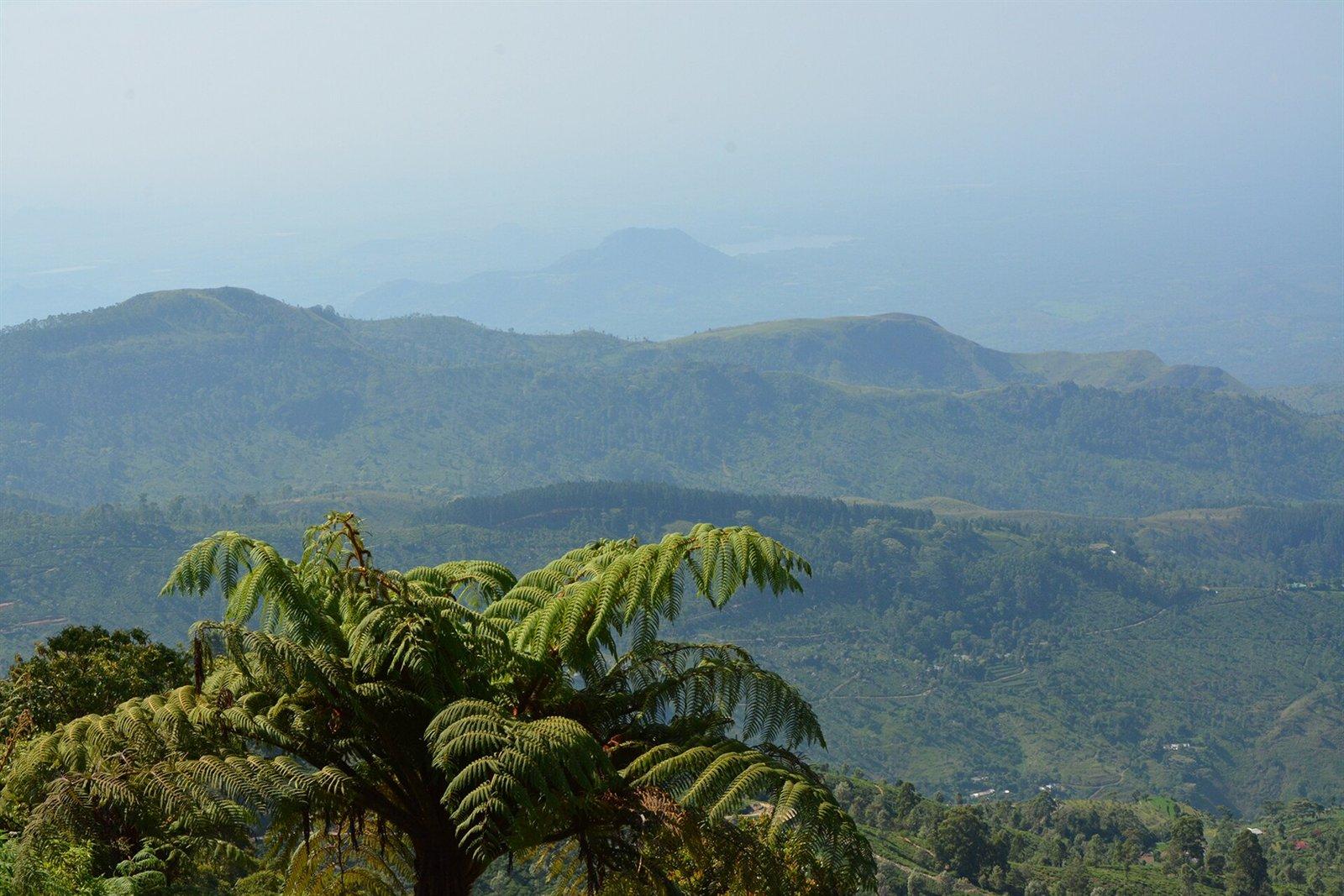
Lipton's Seat sits on a ridge above the Dambatenne tea estate near Haputale, at close to 2,000 metres. The story goes that Sir Thomas Lipton, the Scottish grocer and tea magnate, used the spot to survey the estates he bought in the late nineteenth century. Whether or not he actually sat there with a cup in hand, the view is easy to believe: layered hills, tea bushes and distant plains, often with cloud pooling in the valleys below.
It is one of the few viewpoints in Sri Lanka that rewards the alarm clock. The sunrise here is not just a sunrise; it is a slow reveal of the whole southern highland edge.
The pre-dawn routine
The classic way to visit is to leave Haputale before dawn, take a tuk-tuk to the gate and walk the last stretch to the viewpoint. The drive takes around thirty to forty-five minutes on a narrow estate road, and the walk is gentle but can be misty.
The temperature at that hour is genuinely cold — bring a jacket, a torch and something warm to drink. The gate usually opens early enough for sunrise, but times vary, so confirm with your guesthouse the night before.
Sunrise is the reward: the first light catches the tea terraces and the mist turns gold. On a clear morning you can see across the Uva basin towards the coast. On a cloudy one you get a white wall and a lesson in patience.
- Leave Haputale around 4:30–5am
- Bring a jacket, torch and hot drink
- Confirm gate opening times locally
- Walk the last stretch slowly; the altitude is noticeable
Dambatenne Tea Factory
Dambatenne Tea Factory is nearby and offers tours of the tea-making process, usually with a tasting at the end. The estate is one of the oldest in the region and still produces tea in the traditional way.
The tour is short and informative, and the tea sold there is a good souvenir. Ask at the factory or your guesthouse for current tour times; schedules change with the season and the harvest.
A visit adds context to the view and supports the local economy. It also explains why the hills look the way they do: every contour of tea is a working agricultural system, not a landscape design.
Walking instead of driving
The walk from Haputale to Lipton's Seat is a longer option for fit travellers, passing through tea estates and small villages. It takes two to three hours one way, and the route can be muddy.
Start early, take a tuk-tuk back, and carry water. The path is not always obvious, so ask directions at the estate junctions and stay on the main tracks.
Walking gives you the thing the viewpoint cannot: the sound of the pluckers, the smell of the factory and the sense of how the estate fits together.
When to go and what to pair with it
December to March is the driest and clearest season, though mornings can be misty at any time of year. The viewpoint has a small entrance fee and limited facilities, so carry water and snacks.
Haputale is about an hour from Ella and two hours from Nuwara Eliya, making Lipton's Seat a good half-day trip from either. The town itself has a few guesthouses and a market.
Adisham Bungalow, a preserved colonial manor nearby, is another worthwhile stop, and the Dambatenne factory pairs naturally with the viewpoint. It is one of the Uva Province's most memorable dawns.
Adisham Bungalow and the Haputale ridge
Adisham Bungalow was built in 1931 as the country residence of a British colonial administrator, Sir Thomas Villiers. It is now a Benedictine monastery, and the monks open part of the house to visitors: dark wooden corridors, a library, a chapel and a garden that feels entirely out of place in the tropics.
The bungalow is a short drive or a steep walk from Haputale, and it pairs well with the Lipton's Seat morning. Come down from the viewpoint, have breakfast, then spend an hour at Adisham before the clouds close in.
Haputale itself sits on a knife-edge ridge with views into two valleys. The walk along the railway line towards Idalgashinna is one of the highlands' great low-effort walks: flat, quiet and with tea estates falling away on both sides. Take care on the tracks and check train times.
What sunrise at 2,000 metres feels like
It is cold, and then it is bright. For twenty minutes before the sun clears the ridge, the valleys below hold a layer of cloud that turns from grey to pink to gold, and the tea bushes pick up the light in rows.
Then the mist starts to move, the plains appear in the distance, and within half an hour the whole scene can be swallowed. That is why people leave Haputale in the dark.
The practical advice is simple: arrive early, dress warmly, and do not spend the whole time behind a phone. The view is the point.
Frequently asked questions
- How do you get to Lipton's Seat?
- From Haputale, take a tuk-tuk to the gate and walk the last stretch. The drive takes 30–45 minutes and the walk is gentle. Fit travellers can walk the whole way in two to three hours.
- What time should you arrive at Lipton's Seat?
- Before sunrise, usually around 5:30–6am depending on the season. Leave Haputale around 4:30–5am to allow for the drive and the walk.
- Is Lipton's Seat worth it?
- Yes, if you are in the Haputale area and willing to get up early. The sunrise view over the tea estates is one of the highlands' best, and the Dambatenne factory adds context.
- How cold is it at Lipton's Seat?
- Genuinely cold before dawn, especially with wind. Bring a jacket, a hat and gloves in the cooler months. It warms up quickly after sunrise.
Written by
Sahan Kalpa DayarathnaSahan Kalpa Dayarathna is the editor of Discover Sri Lanka, based in Colombo. He writes the province guides, hotel picks and practical travel advice on this site, and updates them as transport, prices and opening times change.
Story filed 25 May 2026 about Lipton's Seat. Explore more in Uva Province.
More traveller stories
11 May 2026
Nine Arch Bridge: Ella's Jungle Viaduct, and How to See It Properly
Where to stand, how to walk there, when the trains actually cross and why the bridge exists in the first place.
18 May 2026
Ravana Falls: Ella's Roadside Waterfall and the Legend Behind It
A tall cascade beside the Ella–Wellawaya road, tied to the Ramayana and best seen after the rains.