Jaffna Fort: A Walk Through the North's Colonial Ramparts
By Sahan Kalpa Dayarathna · · 4 min read
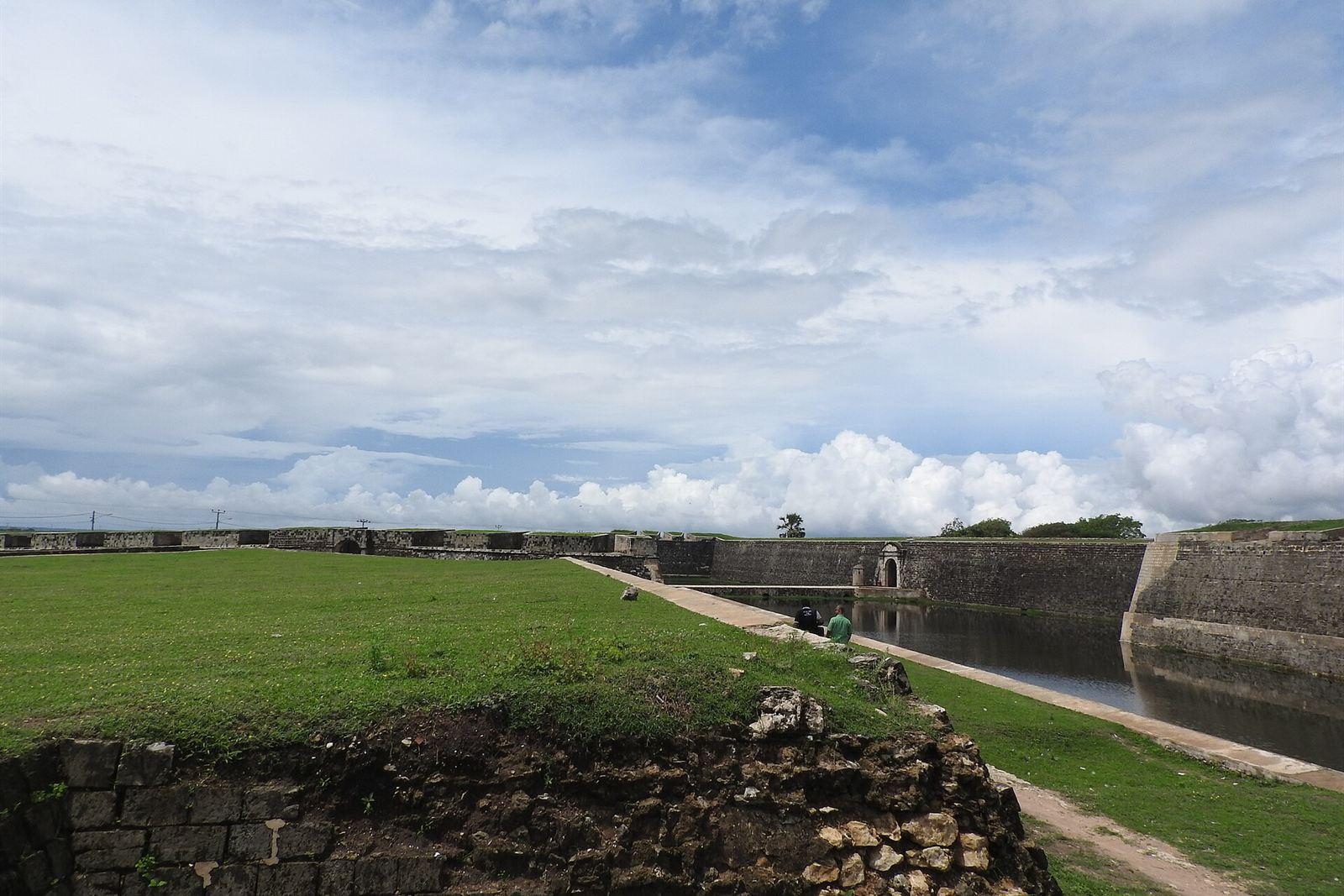
- Province
- Northern Province, Jaffna District
- First built
- 1618 by the Portuguese; rebuilt by the Dutch from 1680
- Shape
- A star-shaped bastioned fort on the lagoon edge
- Entry
- Usually free or a small fee; some areas may be closed
- Time needed
- About an hour
- Best time
- Early morning or late afternoon
Jaffna Fort is a star-shaped fortification on the edge of Jaffna town, looking out over the lagoon. The Portuguese built the first fort here in 1618; the Dutch captured it, rebuilt it on a larger scale and made it the centre of their northern administration. The British later took over, and the fort remained a military site through the civil war, which left parts of it badly damaged.
Today the ramparts, moat and some internal buildings have been restored, and the site is a quiet place to walk and look out over the water. The scale is impressive, and the layout makes it easy to imagine the colonial town that once stood inside.
The layers of the fort
The Portuguese built a small fort here to control the Jaffna lagoon and the peninsula's trade. The Dutch took it in 1658, demolished much of the Portuguese work and rebuilt it as a substantial bastioned fort with a moat, barracks, church and governor's residence. Their initials are still carved over some of the gates.
The British captured Jaffna in 1795 and used the fort as an administrative and military base. In the twentieth century it became a police and army post, and during the civil war it was the scene of heavy fighting. The damage from that period is still visible, and restoration has been slow and partial.
Information boards explain the different phases of construction, though a local guide will bring the history to life more vividly. The fort is also a useful vantage point for understanding the geography of the peninsula: the lagoon, the islands, and the town that grew up around the walls.
Walking the ramparts
The walls are low enough to walk along in places, and the bastions give views across the lagoon and back towards Jaffna town. The eastern ramparts are best in the late afternoon, when the light softens and the water turns silver.
An hour is enough to walk the walls, cross the interior and look at the restored buildings. Some areas may be fenced off or closed when you visit, and there is little shade, so go early or late. Wear comfortable shoes and carry water.
The fort is within walking distance of the town centre, but tuk-tuks are easy to find and cheap. Combine it with the market and the library rather than making a separate trip.
The town around it
Jaffna is one of the most distinctive cities in Sri Lanka. The peninsula has a strong Tamil and Hindu character, visible in the kovils, the food and the language. It feels different from the south, and that is part of the point of coming.
The Jaffna Public Library, rebuilt after being burned in 1981, is a symbol of the north's cultural resilience. The Nallur Kandaswamy Temple is the peninsula's most important Hindu shrine and worth a visit in its own right. The market near the bus stand is a good place to try local snacks and see the town going about its business.
Further afield, the islands — Delft, Nainativu, Kayts — are reachable by road and ferry and offer a quieter, more rural side of the north. Point Pedro, at the northern tip, is the end of the road and a strange, windswept kind of destination.
- Jaffna Public Library: rebuilt and reopened, a symbol of recovery
- Nallur Kandaswamy Temple: the peninsula's great Hindu kovil
- Jaffna market: local snacks, produce and everyday life
- Delft Island: wild ponies, coral walls and a slow ferry crossing
Practicalities for visiting the north
May to September is the dry season and the most comfortable time to explore, though Jaffna is hot year-round and the sea breeze helps. The north-east monsoon brings rain from October to January.
Jaffna is reachable by train from Colombo, a long but scenic journey, or by road on the A9, which takes eight to ten hours. There are also flights. Many travellers combine Jaffna with Anuradhapura or Trincomalee rather than making a separate trip.
The peninsula is small enough to explore by tuk-tuk in a day, but give yourself time to slow down. The north has its own rhythm, and Jaffna Fort is a good place to start understanding it.
A note on the recent past
The civil war ended in 2009, and the north has been rebuilding since. Visitors are welcome, but it is worth being thoughtful: many people here lost relatives, and the fort and other sites carry that history.
Ask before photographing people, avoid military installations, and treat the fort as a place with a complicated past rather than a scenic backdrop. That sensitivity is appreciated and makes for a more honest visit.
Frequently asked questions
- Is Jaffna Fort worth visiting?
- Yes, especially if you are interested in colonial history or the north's recent past. It is not as spectacular as Galle Fort, but it is quieter and more layered, and the lagoon views are excellent.
- How long do you need at Jaffna Fort?
- About an hour to walk the ramparts and explore the interior. Add time if you want to visit the nearby market, library and Nallur temple.
- Is there an entry fee for Jaffna Fort?
- Entry is usually free or a small fee, but some areas may be closed for restoration. Check locally when you arrive.
- How do you get to Jaffna?
- By train from Colombo, by road on the A9, or by flight. The train is scenic and comfortable if you book ahead; the drive takes eight to ten hours.
Written by
Sahan Kalpa DayarathnaSahan Kalpa Dayarathna is the editor of Discover Sri Lanka, based in Colombo. He writes the province guides, hotel picks and practical travel advice on this site, and updates them as transport, prices and opening times change.
Story filed 3 August 2026 about Jaffna Fort. Explore more in Northern Province.
More traveller stories
10 August 2026
Nallur Kandaswamy Temple: Jaffna's Golden Kovil
The north's most important Hindu temple, with a towering gopuram and a calendar of festivals.
17 August 2026
Casuarina Beach: The Northern Tip's Quiet Sands
A long, casuarina-lined beach near Karainagar — calm, local and far from the south-coast crowds.