- Province
- Western Province, Colombo District
- Location
- Beira Lake, Colombo 02, near Slave Island
- Founded
- Late nineteenth century
- Time needed
- About an hour to ninety minutes
- Dress code
- Shoulders and knees covered, shoes and hats off
- Busiest
- Poya days and the Navam Perahera in February
Gangaramaya Temple is not a quiet, single-hall shrine. It is a sprawling complex of pavilions, bodhi trees, statues, clocks, china, vintage cars and gifts from devotees, all packed into a small block beside Beira Lake. Founded in the late nineteenth century and expanded under Galboda Gnanissara Thero, it has become one of Colombo's most visited religious sites — part working temple, part museum of Sri Lankan generosity.
That jumble is the point. Gangaramaya is what happens when a temple accepts everything people bring it, and the result is fascinating rather than reverent. Come for the shrine, stay for the cabinets of typewriters and the vintage cars.
What you will actually see
The main shrine room is the heart of the complex, with a seated Buddha, ornate ceilings and devotees offering flowers. Outside, the bodhi tree is wrapped in prayer flags and surrounded by small shrines and statues.
The museum is where Gangaramaya becomes unusual. Glass cases hold an extraordinary assortment of objects: old typewriters, brass lamps, ceremonial daggers, antique china, cameras and a collection of vintage cars that seems to belong in a different building entirely. Some of it is beautiful, some of it is baffling, and all of it was donated.
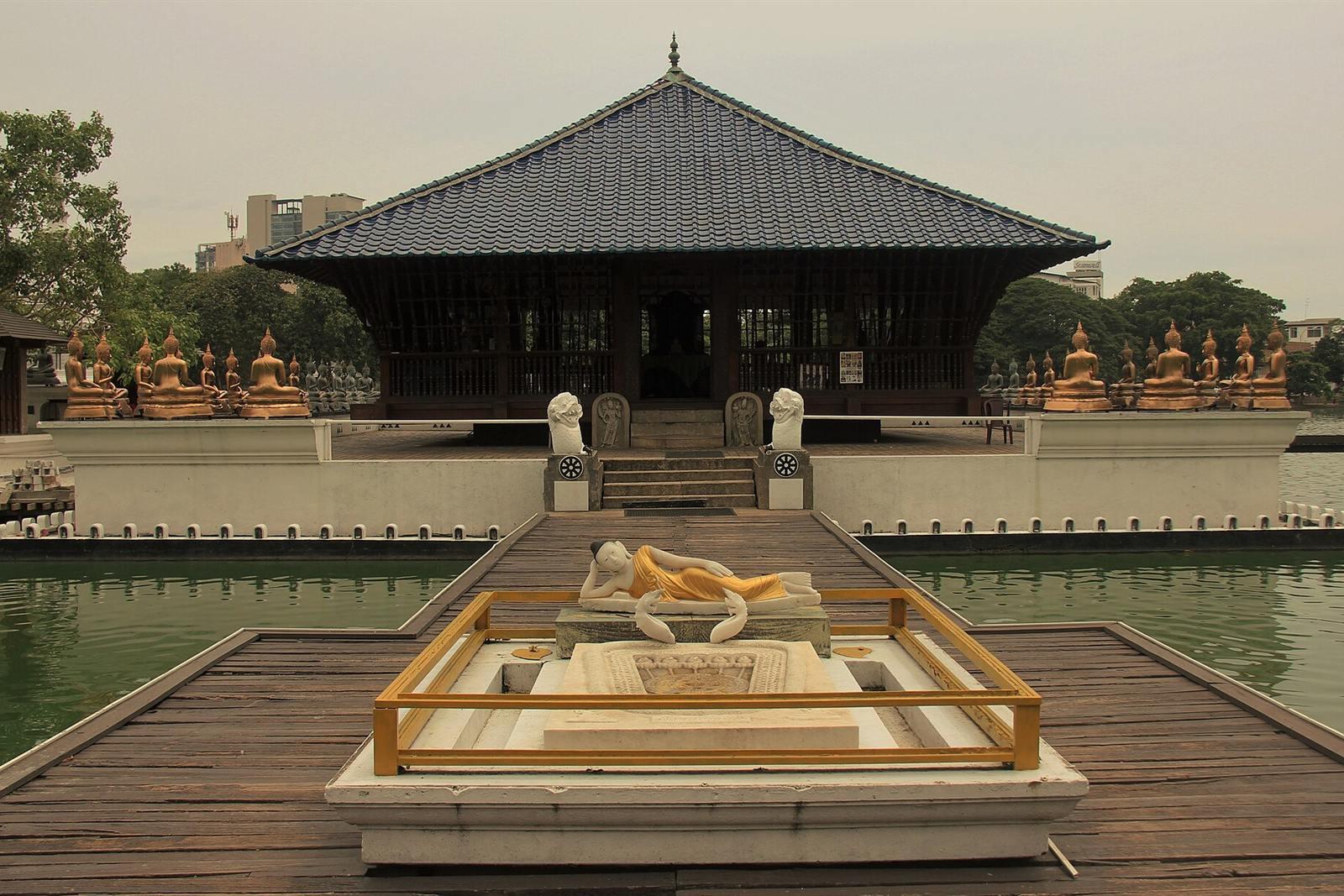
The monastic library holds palm-leaf manuscripts and old books, and the small island shrine of Seema Malaka, connected by a walkway over the lake, is the calmest corner of the whole site. Seema Malaka was designed in the 1970s by Geoffrey Bawa, Sri Lanka's most famous architect, and it is worth the short walk.
- Main shrine room: the seated Buddha and the daily offerings
- Museum: donated objects, antiques and vintage cars
- Seema Malaka: Bawa-designed island shrine on Beira Lake
- Bodhi tree: prayer flags and small shrines in the courtyard
Etiquette for a working temple
Dress respectfully: shoulders and knees covered, shoes and hats removed before entering the shrine areas. Do not point your feet toward Buddha images, and do not turn your back on a shrine for a photograph.
Photography is allowed in many areas but not during active worship. Watch what others are doing, and if a monk or volunteer signals you to stop, stop. Flash is rarely appropriate.
Do not treat the monks as part of the exhibit. If you want a photograph of a person, ask. A quiet donation at the end is a graceful way to say thank you, and small notes are useful for offerings.
The Navam Perahera
Every February, usually on the Poya day, the temple hosts the Navam Perahera: a procession of dancers, drummers, whip crackers and decorated elephants that passes through the streets around Beira Lake.
It is smaller than Kandy's Esala Perahera and easier to see, though the roads close and the area becomes crowded. Viewing spots along the route are free but fill up early. If you are in Colombo in February, it is worth planning around.
Beira Lake and the neighbourhood
The temple sits on the edge of Beira Lake, and the walk along the water is pleasant in the early morning. The lake has shrunk considerably since colonial times but still has a quiet, slightly melancholy character.
Nearby, Slave Island and Pettah are worth exploring on foot. Pettah's market streets are organised by trade, and the Red Mosque — a striking red-and-white building — is a short walk away. Both are free and far more interesting than another shopping mall.
The temple is an easy stop on any Colombo day and a good introduction to the island's Buddhist culture before you travel farther inland. Weekday mornings are calm; weekends and Poya days are busy.
Practical notes
Entry is modest and takes about an hour to ninety minutes at an unhurried pace. Early morning and late afternoon are the most comfortable times, both for the heat and for the light on the lake.
The complex is a working centre of charity and education, with a vocational school and a programme that supports children from low-income families. That social role is part of what makes Gangaramaya feel alive rather than preserved.
Combine the visit with a walk around Beira Lake, a look at Seema Malaka, and then head into Pettah for market streets and street food. Tuk-tuks and ride-hailing apps will get you there easily; traffic around Slave Island is slow at rush hour.
Frequently asked questions
- Is Gangaramaya Temple worth visiting?
- Yes, especially if you are spending a day in Colombo. It is unlike any other temple on the island — part shrine, part museum — and Seema Malaka on the lake is genuinely beautiful.
- Is there an entry fee for Gangaramaya Temple?
- There is a modest entry fee for foreign visitors, and donations are welcome. Confirm the current rate at the entrance.
- What should I wear to Gangaramaya Temple?
- Shoulders and knees covered, shoes and hats removed before the shrine areas. Avoid beachwear and anything revealing.
- When is the Navam Perahera?
- Usually in February, around the full moon Poya day. It is smaller than Kandy's Esala Perahera and easier to watch, though roads close and crowds build early.
Written by
Sahan Kalpa DayarathnaSahan Kalpa Dayarathna is the editor of Discover Sri Lanka, based in Colombo. He writes the province guides, hotel picks and practical travel advice on this site, and updates them as transport, prices and opening times change.
Story filed 19 January 2026 about Gangaramaya Temple. Explore more in Western Province.
More traveller stories
12 January 2026
Colombo's Skyline: How to Spend a Day in Sri Lanka's Capital
Lotus Tower, Galle Face Green and the streets in between — a practical one-day guide to Colombo.
2 February 2026
Negombo Beach: Fishing Boats, Lagoon Sunsets and Easy Airport Stops
A working fishing town with a long sandy beach — and the easiest first or last stop near Colombo airport.